
Last updated November 23, 2026
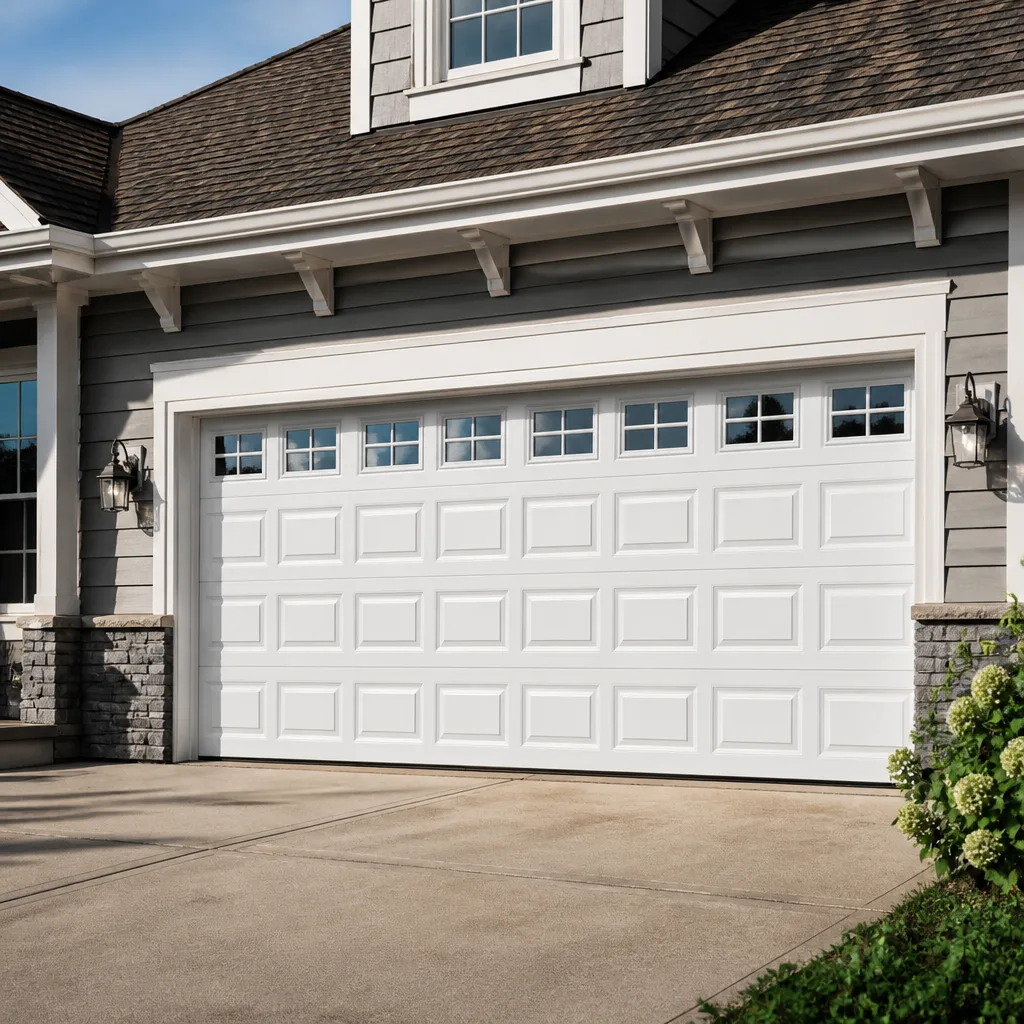 Raised-panel steel
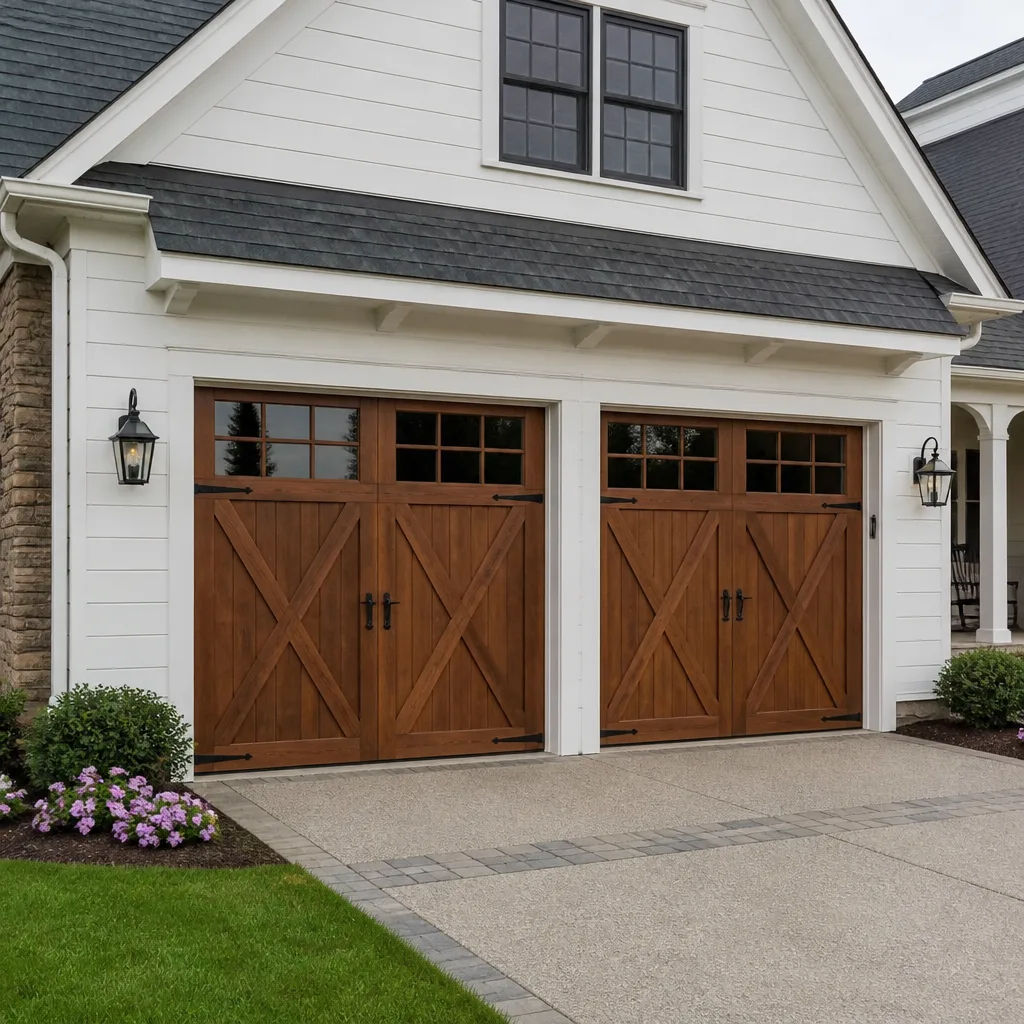 Carriage house
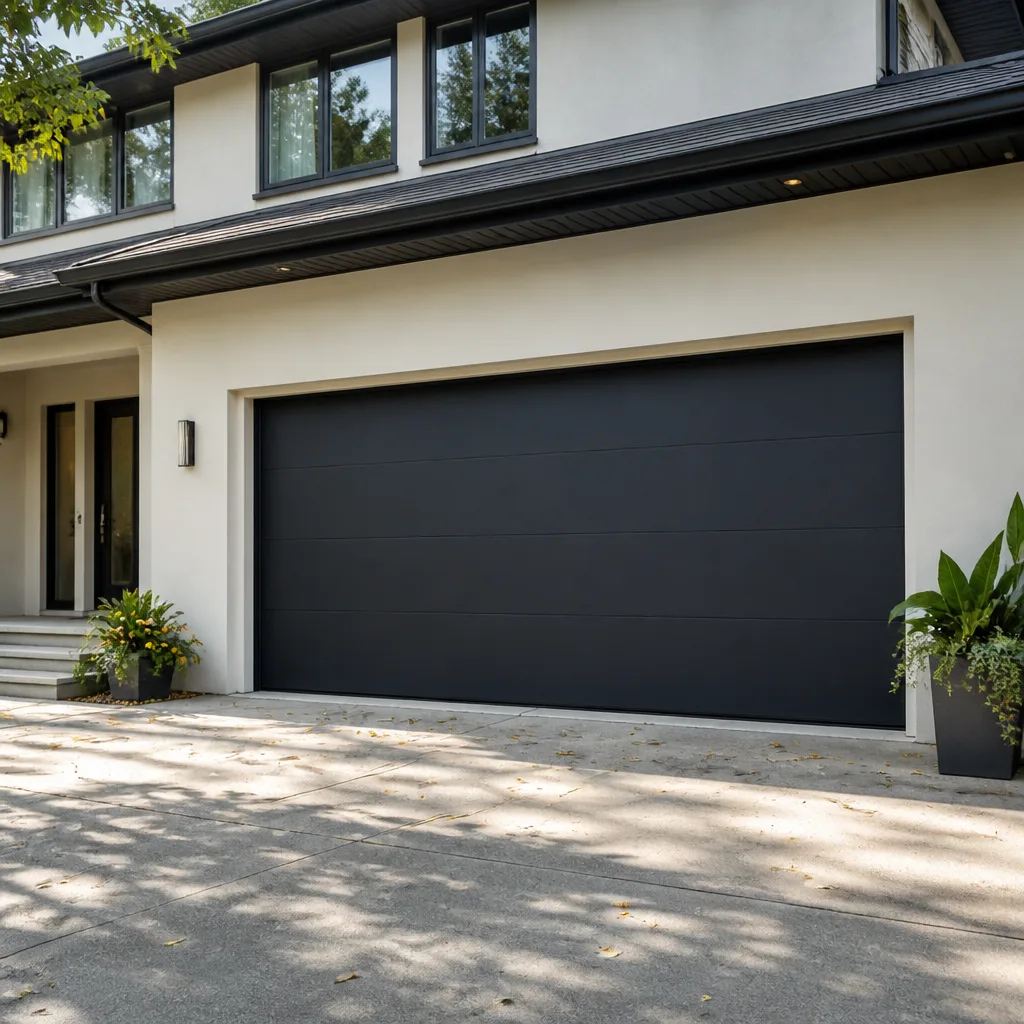 Modern flush
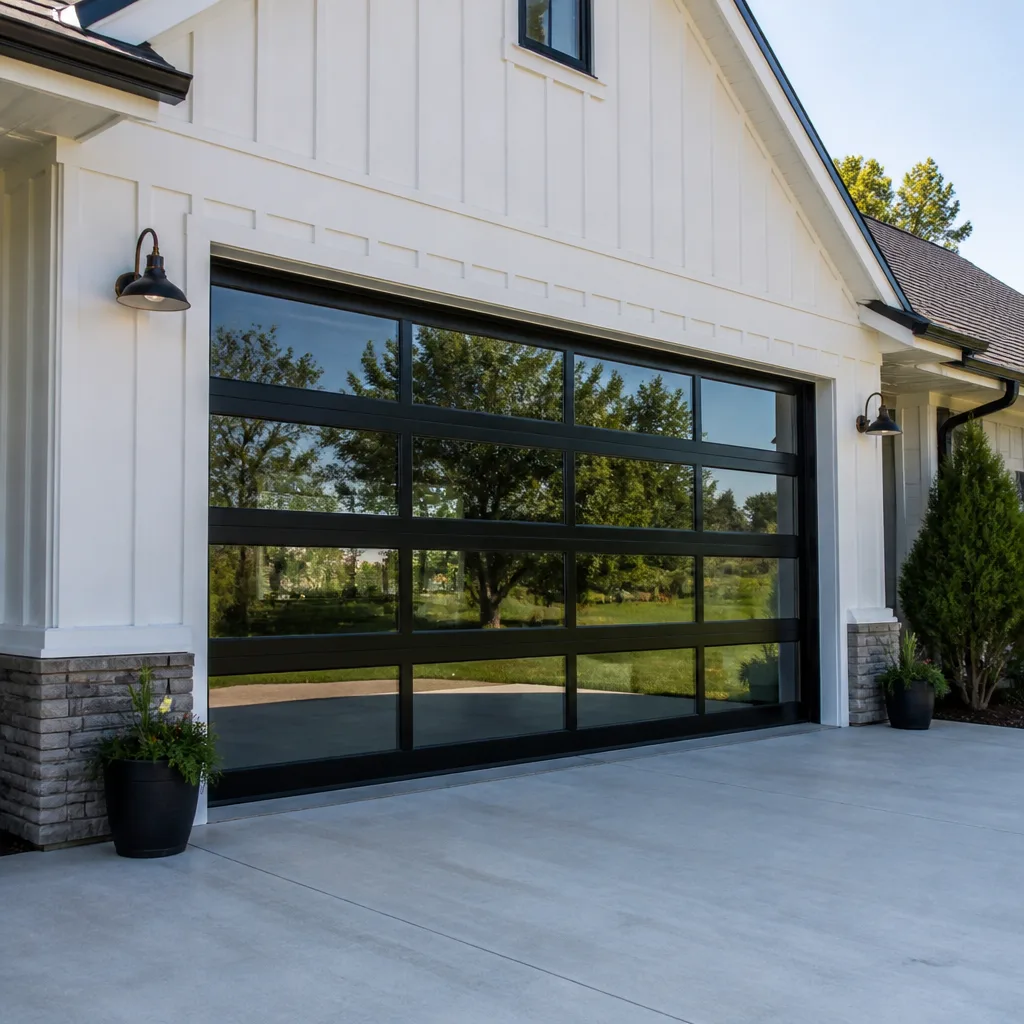 Full-view glass
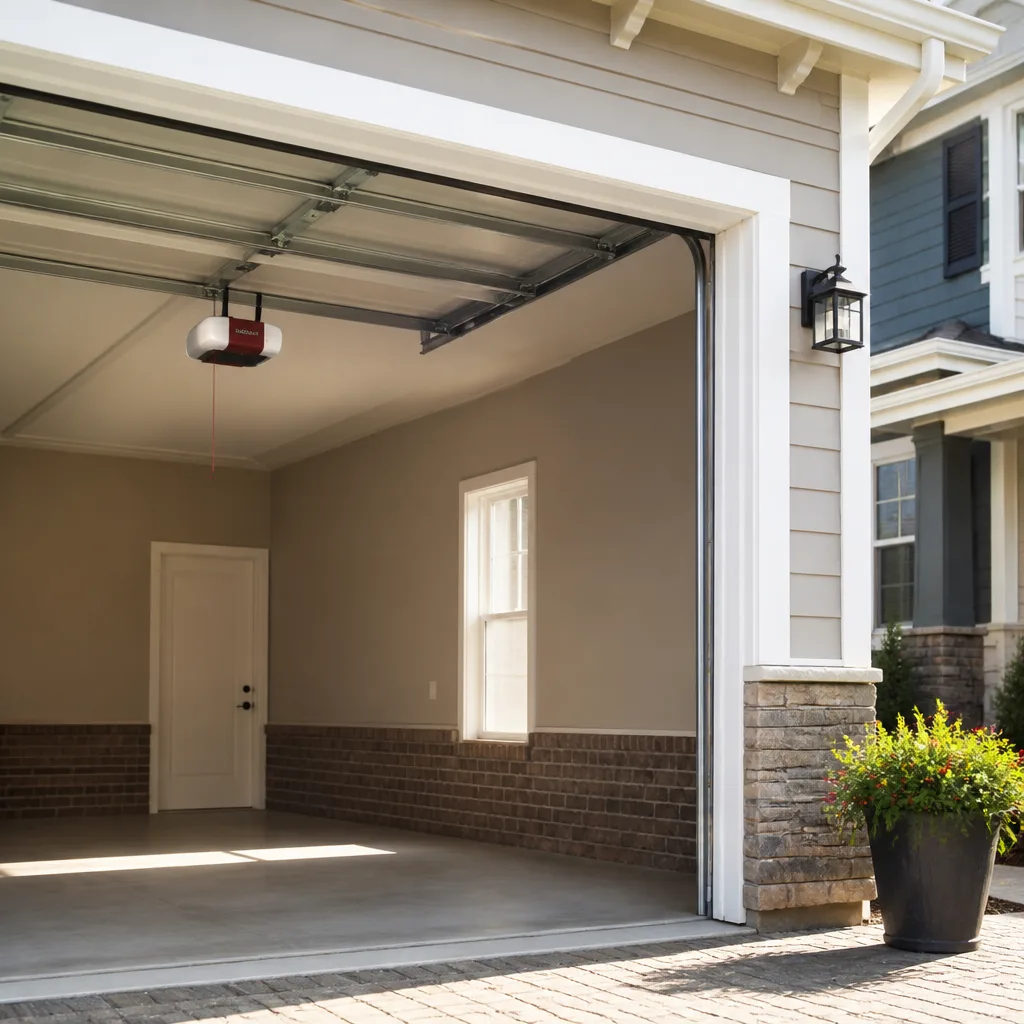 LiftMaster openers
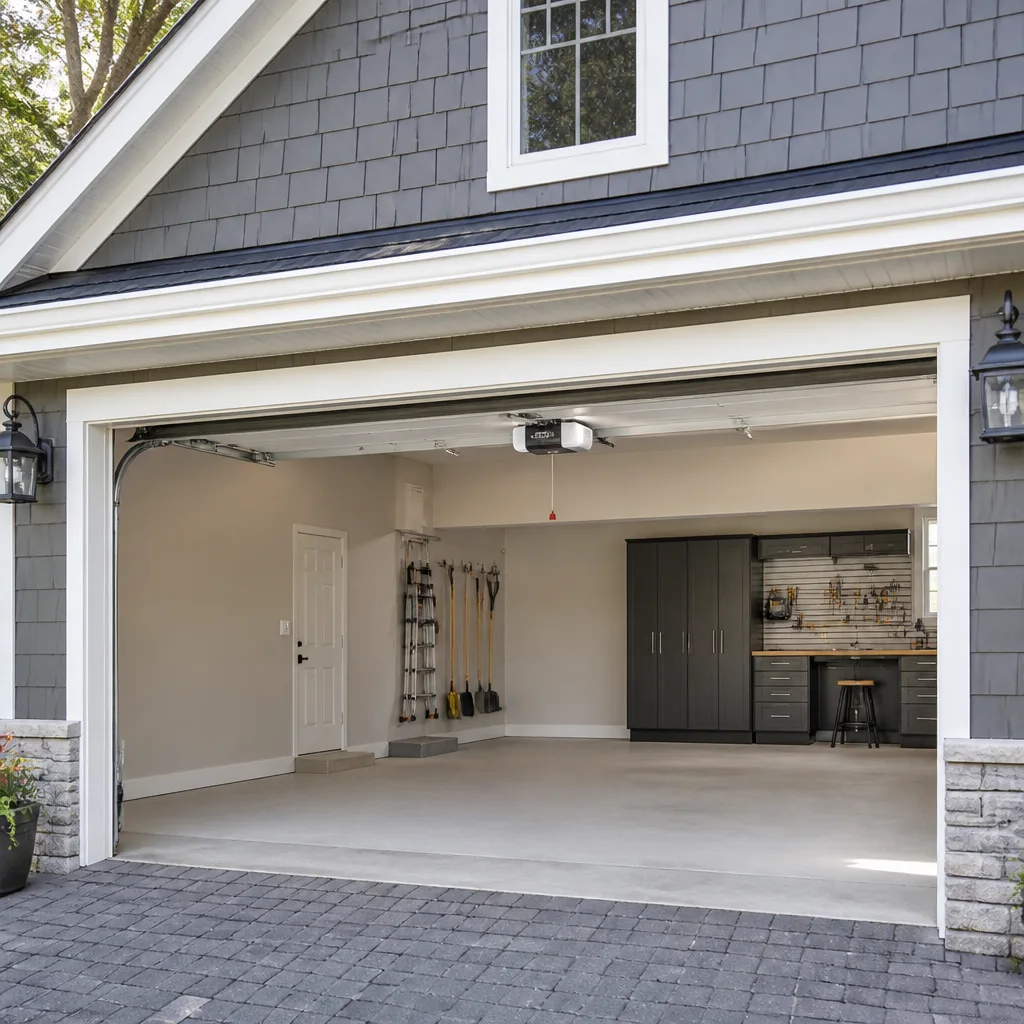 Chamberlain openers
Full 25-point door and opener safety check with every visit - springs, cables, rollers, tracks, and your LiftMaster or Chamberlain opener included
You get a price before we start. It does not change when the pro arrives.
Get your free estimateThe Complete Guide to Garage Doors in East Providence
Most garage door guides are written for a house that doesn’t exist: a wide suburban driveway, a perfectly square opening, and a climate that never freezes. This one starts from East Providence. Here, a January wind off Narragansett Bay can weld a bottom seal to the concrete, a ten-foot driveway makes door sizing a real decision, and a lot of the housing stock went up between the 1950s and 1980s with hardware that has quietly outlived its design life. We wrote this guide to cover what those conditions mean for choosing, repairing, and maintaining a door in this city. By the end you’ll know which materials hold up here, which door types fit the lots people actually have, and when a repair is worth doing versus a replacement.
Quick Answer
The best garage door for East Providence is a galvanized steel or aluminum sectional door sized to your actual rough opening, paired with a properly rated torsion spring system and a weather seal that can survive freeze-thaw cycles. Most repairs here – springs, openers, tracks, cables, rollers – are fixable in a single visit; replacement makes more sense when the door panels are dented or rusted through, or the opening has settled out of square. And because East Providence’s mid-century homes often have non-standard opening sizes, measure before you shop, not after.
Styles & brands we work with
- Raised-panel steel
- Carriage house
- Modern flush
- Full-view glass
- LiftMaster openers
- Chamberlain openers
Table of Contents
- Why Material Choice Matters More Here Than Anywhere
- The Reality of Older East Providence Garages
- Which Door Types Make Sense in East Providence
- How the Local Climate Wears Out Your Door
- Springs: The Part That Fails First
- Choosing and Repairing an Opener
- Repair or Replace? A Decision Framework
- Full-Service Company vs. Handyman
Why Material Choice Matters More Here Than Anywhere
East Providence sits close to the water, and that shapes what holds up. Steel doors are the default in most of the country because they’re strong and reasonably priced, but raw or lightly coated steel in a humid, saline-leaning environment starts showing surface rust at the edges, welds, and bottom panels faster than the product literature suggests. Galvanized steel – steel that’s been coated with a zinc layer during manufacture – resists that oxidation far better. Aluminum resists it better still, since it doesn’t rust at all in the way steel does, though it dents more easily and can flex in wider openings.
If your door faces the weather on an exposed lot, or you’re on one of the lower-lying streets where morning humidity lingers, we’d steer you toward galvanized steel or aluminum over raw steel every time. For homes closer to the Bay, in Riverside and Watchemoket especially, that recommendation gets stronger. Salt-laden air doesn’t just attack the door panels – it works on hinges, rollers, and the steel track itself, which is why a maintenance routine that includes wiping down the hardware and checking for early rust matters more here than in an inland town.
Wood doors are beautiful and genuinely appropriate on some of the older homes around Rumford, where the architecture calls for it. But wood needs annual attention in this climate, and a neglected wood door will crack, warp, and delaminate faster than a neglected steel one. If you want the look without the upkeep, composite and steel-backed carriage styles get you close to the aesthetic with far less work.
What to check on your current door
- Rust along the bottom panel and near the hinges. Surface spots can be treated; rust-through means the panel is done.
- Rust on the track, especially in the vertical sections. A pitted track will drag the rollers.
- Hinge pin wear. Dry or corroded hinges squeak and eventually seize.
- Weather seal condition. A hardened or torn seal lets in water and cold air, which accelerates everything else.
The Reality of Older East Providence Garages
A large share of East Providence homes were built between the 1950s and 1980s, and garages from that era were not built to the tolerances of modern construction. That has a direct consequence for anyone shopping for a replacement door: the rough opening – the framed hole the door fits into – may not match any standard size. A fairly common situation is an opening that’s an inch or two off from a nominal 8-foot or 9-foot width, or a header height that’s slightly lower than the modern standard the catalog assumes.
Worse, some mid-century openings have settled out of square. The framing at the bottom may be an inch wider than at the top, or the floor may slope toward the door. None of this is unusual here – it’s the normal condition of a garage that’s been through decades of freeze-thaw cycles with a concrete slab underneath. But it means the door has to be measured and adjusted to the actual opening, not ordered off a nominal size and forced into place.
This is one of the reasons a replacement is a measured job rather than a quick purchase. The technician measures the opening at multiple points, checks that the floor is level under the door, confirms the header strength, and only then specifies the door. If your opening is non-standard, a custom-sized door or a combination of standard sizing and adjustment gets you a proper fit. Skipping that step is how you end up with a door that drags at one corner or leaves a gap at the other.
Steps in a proper replacement measurement
- Measure the opening width at the top, middle, and bottom; use the narrowest figure.
- Measure the height on both sides of the opening; use the shortest figure.
- Check that the floor under the door is level – a bowed slab means the bottom seal won’t sit flush.
- Confirm the headroom above the opening, since a torsion spring system needs room to mount.
- Check side clearance for the tracks and the door’s travel path.
- Note any settling or out-of-square framing that will need adjusting before install.
Which Door Types Make Sense in East Providence
Three door types dominate the market, and each fits particular East Providence conditions. Knowing which is right depends less on aesthetics and more on your driveway, your ceiling height, and how the door needs to move.
Sectional doors are the most common choice, and for good reason. They travel up along tracks into the ceiling, so they need overhead room but almost no side room – which matters on the narrow driveways common on older East Providence lots where there’s not much clearance on either side of the opening. They seal well against the weather, insulate well, and come in enough styles to suit anything from a ranch to a colonial.
Roll-up doors coil tightly above the opening rather than swinging up on side tracks. They’re space-efficient and work well where ceiling height is limited, which happens in some older garages. The tradeoff is appearance – they read as functional rather than residential, though a good roll-up is reliable and low-maintenance.
Carriage doors – the swing-style or look-alike sectional doors that mimic barn doors – suit the older homes around Rumford and the historic corner of East Providence particularly well. They add character to a period home. If your driveway is narrow, a true swing-out carriage door needs room to clear the vehicles, so the sectional version that looks like a carriage door usually wins.
Ceiling height is the factor people forget. A standard sectional door needs enough headroom for the door panels to stack up into and for the track to curve back. Some older garages here have low ceilings, and in those cases a low-profile track setup or a roll-up is the practical call.
How the Local Climate Wears Out Your Door
New England’s freeze-thaw cycle is hard on garage doors in a way that product data sheets rarely account for. Water gets into a seal, a track gap, or a hinge joint, freezes overnight, expands, and then thaws. Repeat that through a winter and again in spring, and the damage compounds. In East Providence this cycle is a real factor because the city sits right where the air off Narragansett Bay interacts with cold inland air, producing winters that swing back and forth around the freezing mark rather than staying reliably cold.
The most visible casualty is the bottom seal. A rubber or vinyl seal that gets wet, then freezes, will stiffen and eventually crack. Once it’s stiff, it stops sealing, which lets water underneath the door onto the garage floor and cold air into the space. Tracks are a subtler problem: a track that’s exposed to moisture will start to pit, and a pitted track drags the rollers, which speeds up roller and hinge wear. Hinges and rollers are the moving parts most affected, and they’re also the cheapest to maintain.
Springs are under constant load, and cold makes steel more brittle. The temperature swings and the humidity cycling shorten a spring’s useful life here compared to a dry climate where the temperature stays relatively stable. That’s not a defect in the spring – it’s a local condition. It’s also why a maintenance check that includes spring inspection is worth doing before winter sets in each year.
Seasonal maintenance checklist
- Before winter: inspect the bottom seal and replace it if it’s cracked or stiff.
- Wipe down hinges and rollers with a light lubricant; avoid greasing the tracks themselves.
- Check the tracks for rust or pitting and clean them.
- Test door balance by disconnecting the opener and lifting the door halfway – it should hold.
- Look for rust or wear at every hinge and roller.
- After winter: check the seal again and confirm the door still closes fully against the floor.
Springs: The Part That Fails First
Springs are the most dangerous component of any garage door and the one most often mishandled. A torsion spring or pair of extension springs is under enormous tension – it’s what counterbalances the door’s weight so the opener only has to lift a fraction of it. When a spring snaps, the door can become dead weight, and the act of changing a spring without the right tools and technique has caused serious injuries. We treat garage door spring repair as its own discipline here because it is.
The signs of a failing spring are consistent. The door feels much heavier when you lift it by hand. The opener strains or reverses. The door rises partway and stops. Or you hear a loud bang from the garage – the sound of a loaded spring letting go. In this climate, the temperature cycling across a season accelerates the fatigue, so a spring that feels fine in autumn can fail during a cold snap in February.
There are two spring types to know. Torsion springs mount above the door opening on a shaft and do the counterbalancing by twisting. Extension springs run along the horizontal tracks on each side and stretch. Torsion systems are generally safer and smoother, and they’re the more common setup on newer doors. Extension springs need safety cables to contain them if they break, and a door without those cables is a real hazard.
What to check (not to fix yourself)
- Listen for a bang from the garage.
- If the door won’t lift more than a foot, the spring is likely broken.
- Look at the torsion shaft above the door – a gap in a coiled spring means it’s broken.
- Check extension springs for missing safety cables.
- Do not attempt to wind, unwind, or replace a spring yourself. Call a trained technician.
If your spring has failed, don’t run the opener. Forcing a heavy door with a broken spring strains the opener motor and can damage the door panels or drop the door unexpectedly. Leave it down if you can, and call for service.
Choosing and Repairing an Opener
An opener is a motor-and-control system, not a single part, and it fails in predictable ways. A door that reverses for no reason, a remote that stops working, a wall button that’s dead while the remote still works, a motor that hums but doesn’t move the door – each points to a different component. Diagnosing the system rather than guessing at the symptom is the difference between a proper fix and a repeat call.
The brands you’ll find in East Providence garages are a known set: LiftMaster, Chamberlain, Genie, and Craftsman cover the vast majority of residential setups, and Raynor is common on doors paired with certain opener systems. Because the control logic and safety-reverse systems differ across these brands, the technician who knows the brand can diagnose faster and stock the right part. That’s why we keep our team trained across the major brands rather than treating every opener as interchangeable.
When it’s time to replace rather than repair, the choice comes down to a few things: whether you have a torsion or extension spring setup (some openers suit one better), whether you want a battery backup for power outages, and whether you want smart-home connectivity. Belt-drive openers are quieter and well-suited to garages under bedrooms; chain-drive units are louder but very durable. For most homes in East Providence, a belt-drive unit with a battery backup is a sensible default.
Repair or Replace? A Decision Framework
The single most common question we get is whether to repair or replace. The honest answer depends on the door’s age, the extent of damage, and how many issues have piled up. Here’s how we think about it, and how you can too.
Repair makes sense when the door panels are structurally sound and the problem is a single component – a spring, an opener, a set of rollers, a bent track, a torn seal. All of those are fixable, and a repair on a good door is almost always the right call. A door with sound panels and healthy framing has plenty of life left, and replacing it because of a broken spring is throwing money away.
Replacement makes sense when the panels are rusted through, deeply dented, or warped; when the door has been repaired repeatedly for different issues; when the hardware is so old that parts no longer match; or when the door is simply past the point where the cost of ongoing repairs is adding up. A door that needs new springs, new rollers, a new track, and new panels isn’t a repair job – it’s a replacement in disguise.
A simple framework
- Count the separate problems. One or two components = repair. Four or more = weigh replacement.
- Check the panels. Rust-through, deep dents, or warping push toward replacement.
- Check the opening. If the framing has settled and the door no longer fits, a proper replacement may be the cleaner path.
- Consider the hardware age. If the hinges and rollers are corroded, they’re likely to fail one after another.
- Get a written estimate for both options and compare them honestly.
For most East Providence homes, the answer falls clearly on one side once you run through those steps. A door with a single broken spring is a repair. A 1980s door with rusted panels, corroded hardware, and a failing opener is a replacement.
Full-Service Company vs. Handyman
This is where a lot of people get burned, and it has nothing to do with price. A general handyman can tighten a bracket, lubricate a track, or replace a wall button. But a garage door is a mechanical system with a safety-reverse mechanism, a balanced spring load, and a door that weighs a couple of hundred pounds. When something goes wrong after the job – the door reverses unpredictably, the spring fails, the opener won’t sync – you want someone who knows the system, not someone who’s guessing.
The practical difference shows up in a few places. A full-service company diagnoses by the actual system: it checks whether the problem is the spring, the opener, the track, or the linkage, and fixes the right one. It knows the brand of opener you have and can diagnose it specifically. It handles both opener repair and door repair as related but distinct work. And it stands behind the installation, so if the door doesn’t sit right after install, the call goes back to the same company rather than to whoever installed it. garage door repair and installation aren’t separate transactions for us – they’re the same job in different phases.
That matters most after a new door goes in. Installation is a measured, scheduled job, not an emergency visit, so the door is specified, ordered, and fitted properly. But when a newly installed door needs adjustment, or a replacement opener needs tuning, the company that did the work should be the one who handles it. A handyman who installs a door without the right measurement and adjustment can leave you with a door that drags or leaves a gap – and then there’s no one to call.
Common Mistakes to Avoid
- Ordering a door off a nominal size without measuring the opening. East Providence’s older homes frequently have non-standard rough openings. The door has to be fitted to the actual opening, not the other way around.
- Letting a broken spring sit while you run the opener. A heavy door on a broken spring strains the motor and can drop unexpectedly. Don’t force it.
- Choosing raw steel over galvanized or aluminum on an exposed lot. Humidity and the salt-leaning air near the Bay will attack a raw steel door faster than you’d expect. The finish matters.
- Skipping the bottom seal inspection before winter. That’s the component most likely to fail in freeze-thaw conditions, and once it’s stiff the whole door starts leaking cold air and water.
- Assuming every opener works the same. LiftMaster, Chamberlain, Genie, and Craftsman systems have different control logic. A fix that works on one can be wrong on another.
- Hiring a generalist for spring work. Springs are the most dangerous part of the door, and they’re not a job for a handyman.
- Ignoring a slightly out-of-square opening. A settled frame won’t show up until the door binds at one corner. Fix it at install, not after.
See the difference
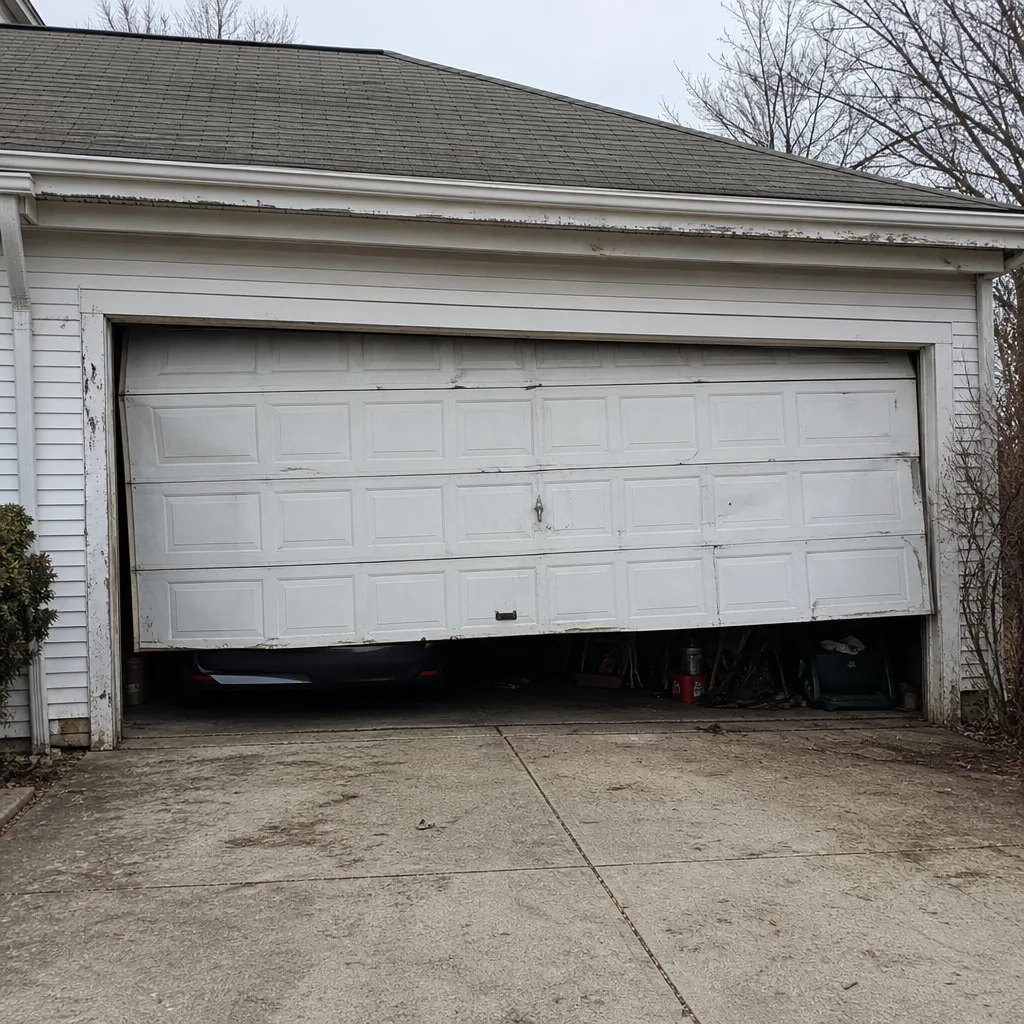 Before
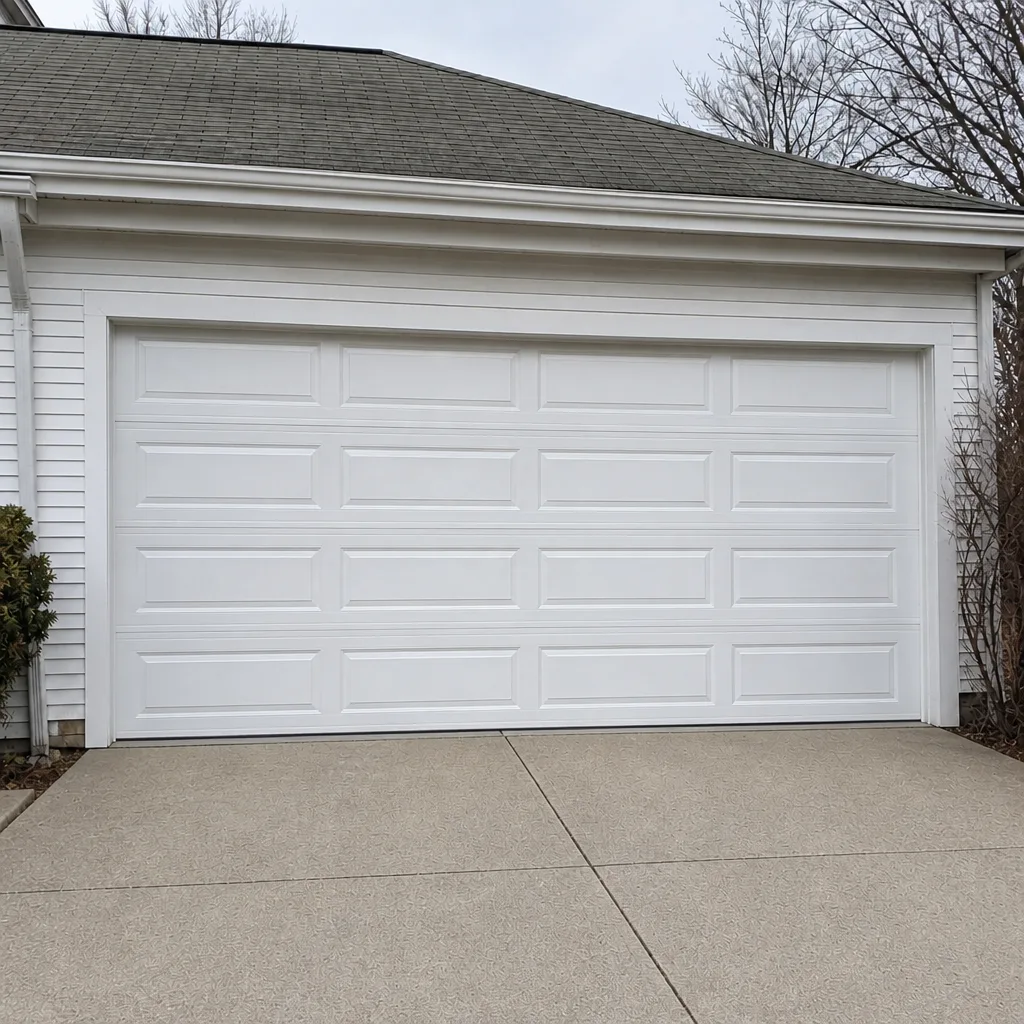 After
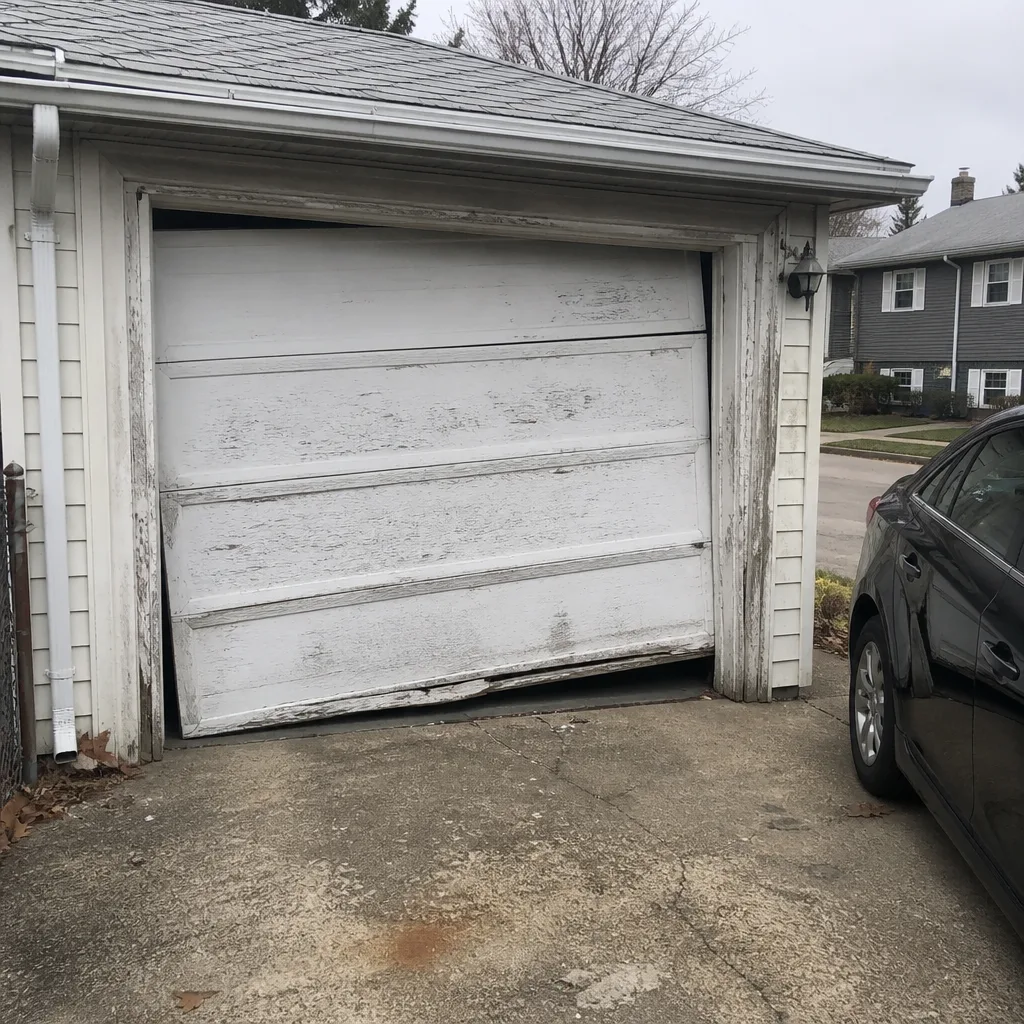 Before
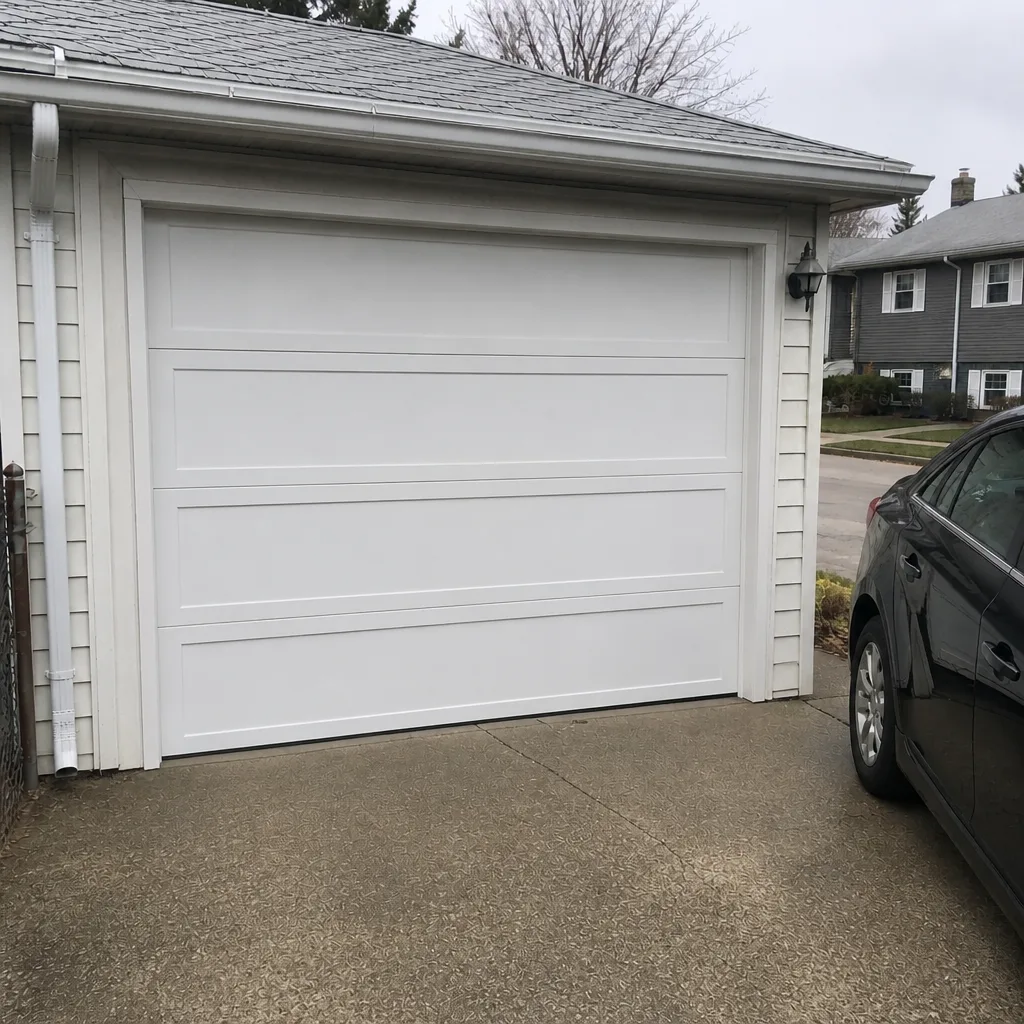 After
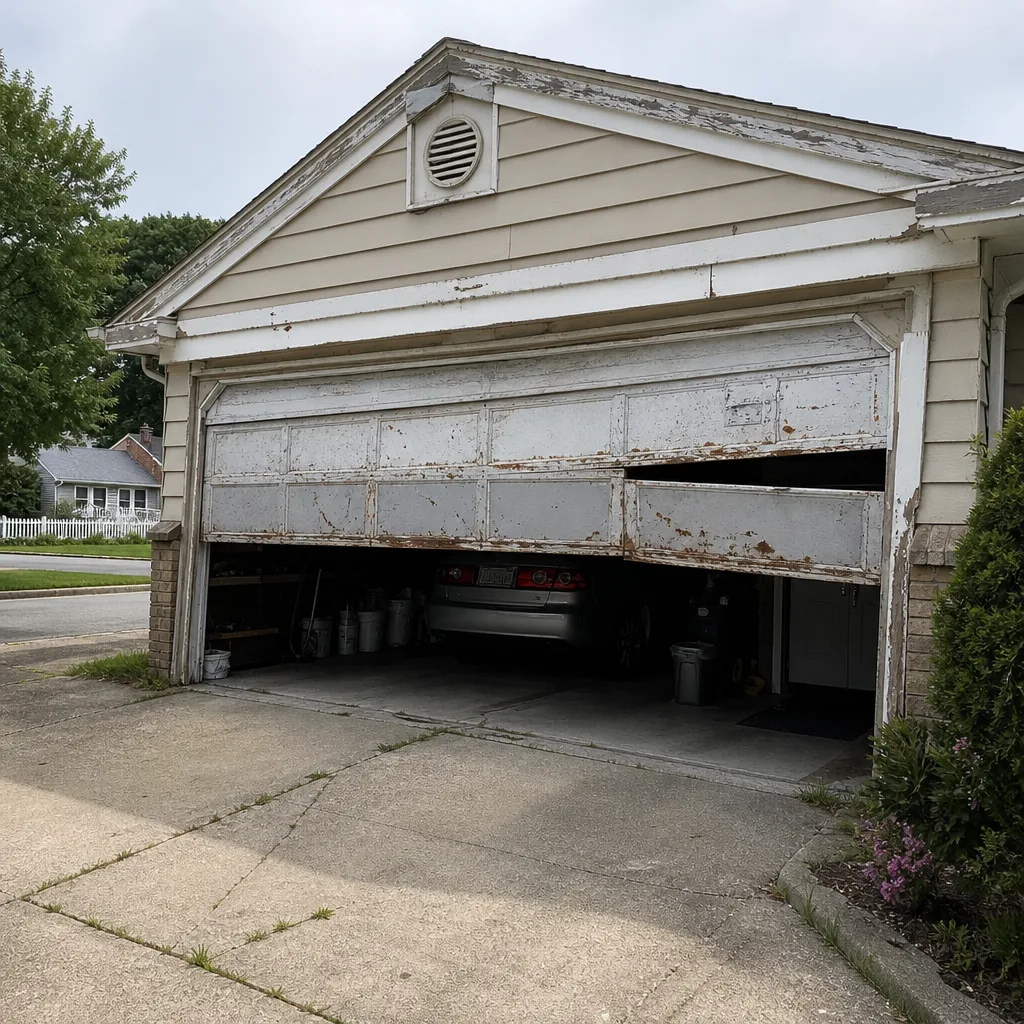 Before
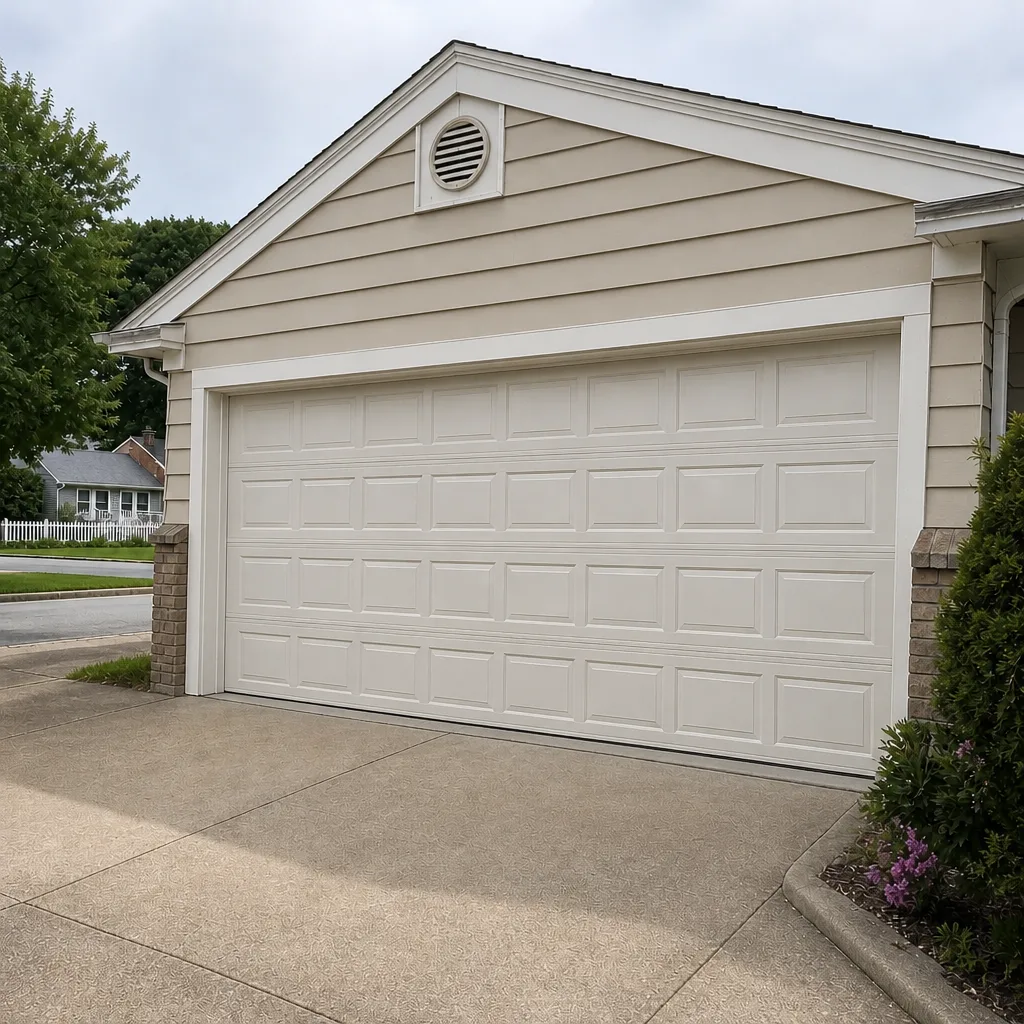 After
When to Call a Professional
Some situations are worth a call rather than a repair attempt. Call if a spring has snapped or you see a gap in the torsion spring above the door. Call if the door reverses unpredictably, stops partway, or won’t close fully. Call if the opener hums but the door doesn’t move, or the remote and wall button disagree. Call if the door is visibly off-track, tilted, or binding at one corner, or if the bottom seal and hardware show heavy corrosion. And call if the door won’t close at all – that’s a security gap you don’t want overnight.
East Providence Garage Door Repair offers free estimates in East Providence – call (855) 648-6750. We answer 24/7. Fast dispatch from 7am to 7pm, Sunday through Friday. Our technicians have up to 8 years of experience, and the price is quoted and agreed before any work starts.
Frequently Asked Questions
Most residential replacements in this city fall somewhere in a broad range that depends on door type, material, size, and whether the opening needs adjustment. Standard sectional steel doors sit at the lower end; galvanized and aluminum doors and custom sizing push higher. The written estimate sets the exact price, so start with a free measure and quote – call (855) 648-6750.
Because this region’s freeze-thaw cycle and humidity swings shorten a spring’s life compared to a drier, steadier climate. Cold makes steel more brittle, and the cycles of the local seasons put more wear on the loaded spring. The answer is an annual inspection and replacing the spring when it fails, not running the door on a broken one.
Usually, yes – opener repairs are one of the faster jobs. We answer 24/7, with fast dispatch from 7am to 7pm, Sunday through Friday. If your door won’t close or the motor is failing, call (855) 648-6750 and we’ll get a technician to you.
Sometimes. Mid-century homes here often have non-standard rough openings, so the opening gets measured at multiple points and the door is specified to fit. A custom-sized door may be needed; in other cases, standard sizing plus adjustment works. It depends on the measurement.
A full-service company diagnoses the system – spring, opener, track, or linkage – and fixes the right one, using brand-specific knowledge. A handyman can tighten a bracket but can’t safely handle a spring or diagnose a specific opener. When something goes wrong after the job, you want the company that did the work.
Yes. We’re trained across LiftMaster, Chamberlain, Genie, Clopay, Amarr, Wayne Dalton, Craftsman, and Raynor, so we diagnose by the actual system rather than a one-size-fits-all approach. That covers the vast majority of openers in East Providence homes.
The Bottom Line
Choosing, repairing, and maintaining a garage door in East Providence comes down to knowing the local conditions. Pick galvanized steel or aluminum if your door faces the weather, measure the rough opening before you shop, match the door type to your driveway and ceiling height, and keep the bottom seal and spring in check before winter. Repair the door if the damage is one or two components; replace it if the panels are gone and the hardware has piled up. And when the job involves a spring, an opener you don’t know, or a door that won’t close, get a trained technician rather than a generalist. For everything in between, garage door opener repair and the rest of the work are one call away.
Contact Us
Call (855) 648-6750 for a free estimate. We answer 24/7. Fast dispatch from 7am to 7pm, Sunday through Friday. Whether you’re dealing with a broken spring, an opener that won’t respond, or you’re planning a new door for your East Providence home, East Providence Garage Door Repair can help. From a broken spring to a brand-new door, one call covers it.
Written by the team at East Providence Garage Door Repair.