
Last updated November 23, 2026
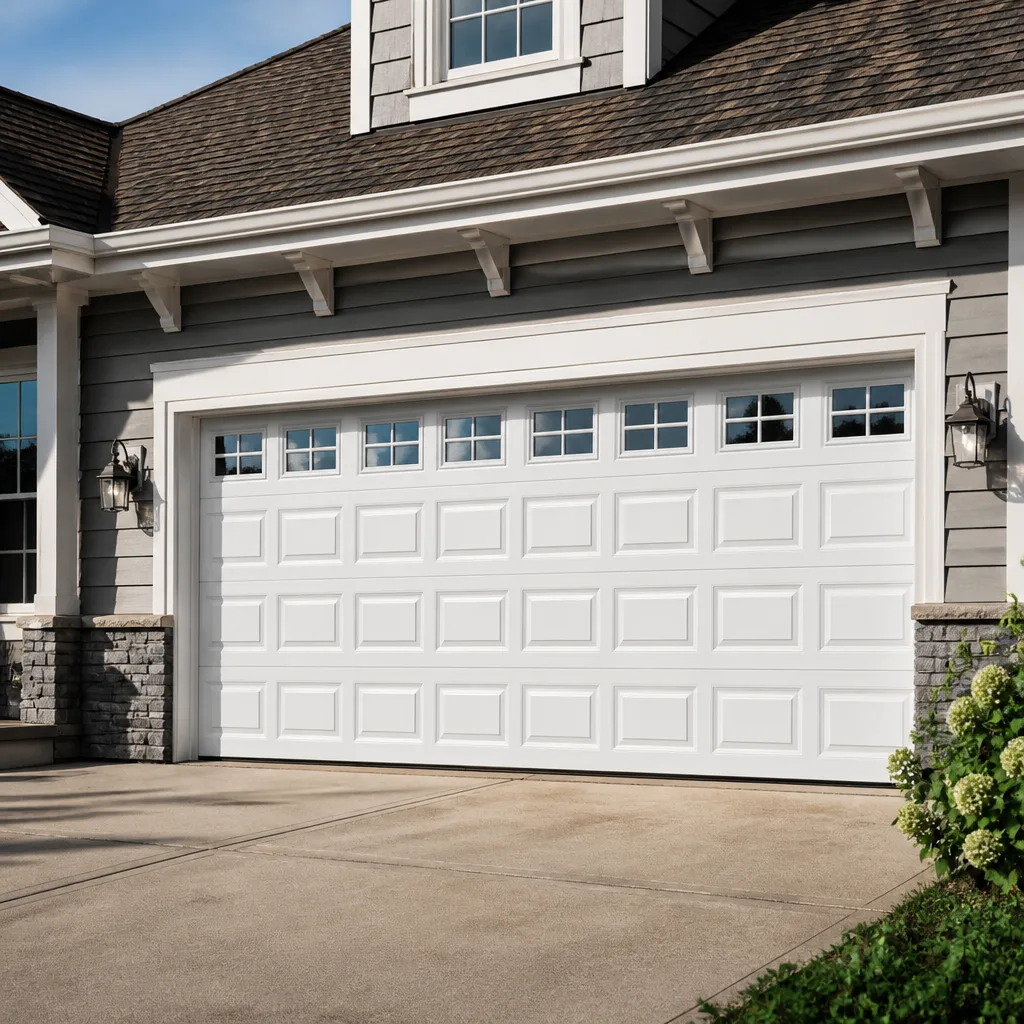 Raised-panel steel
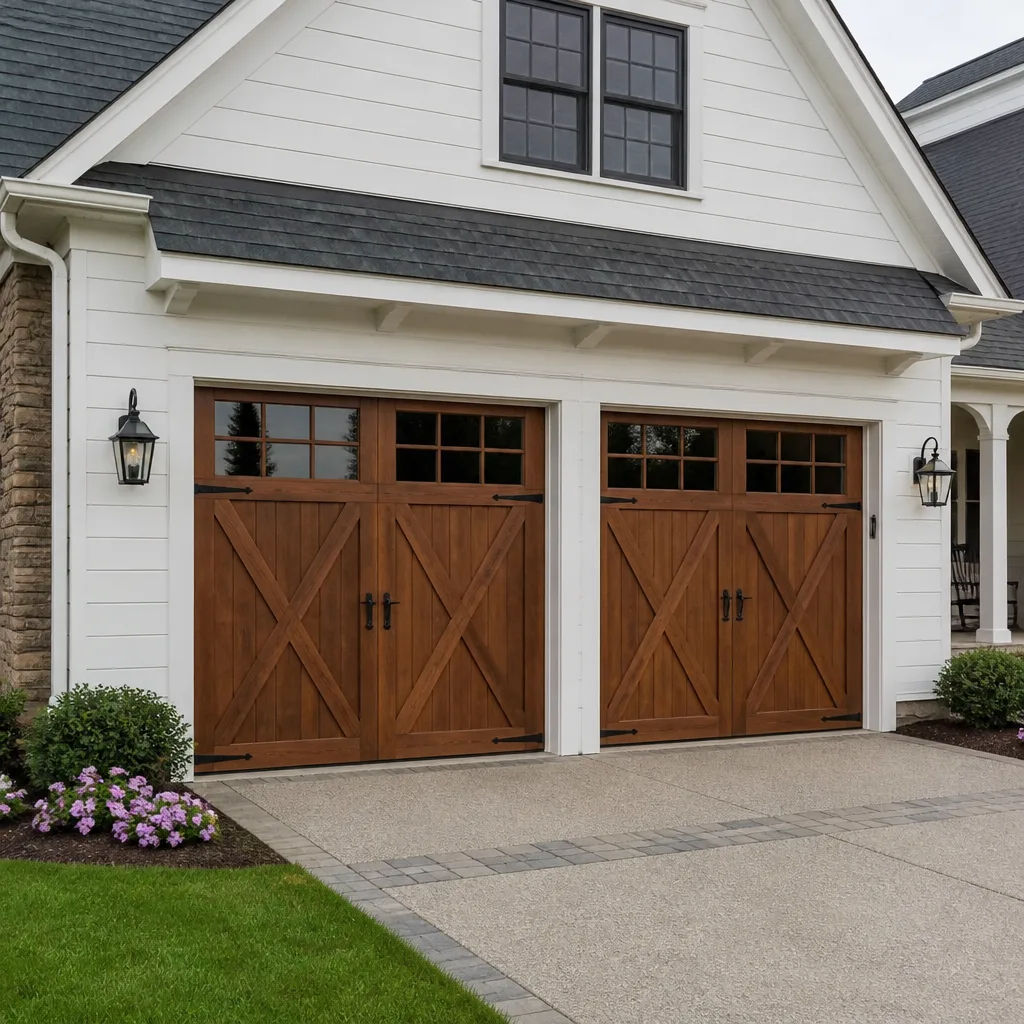 Carriage house
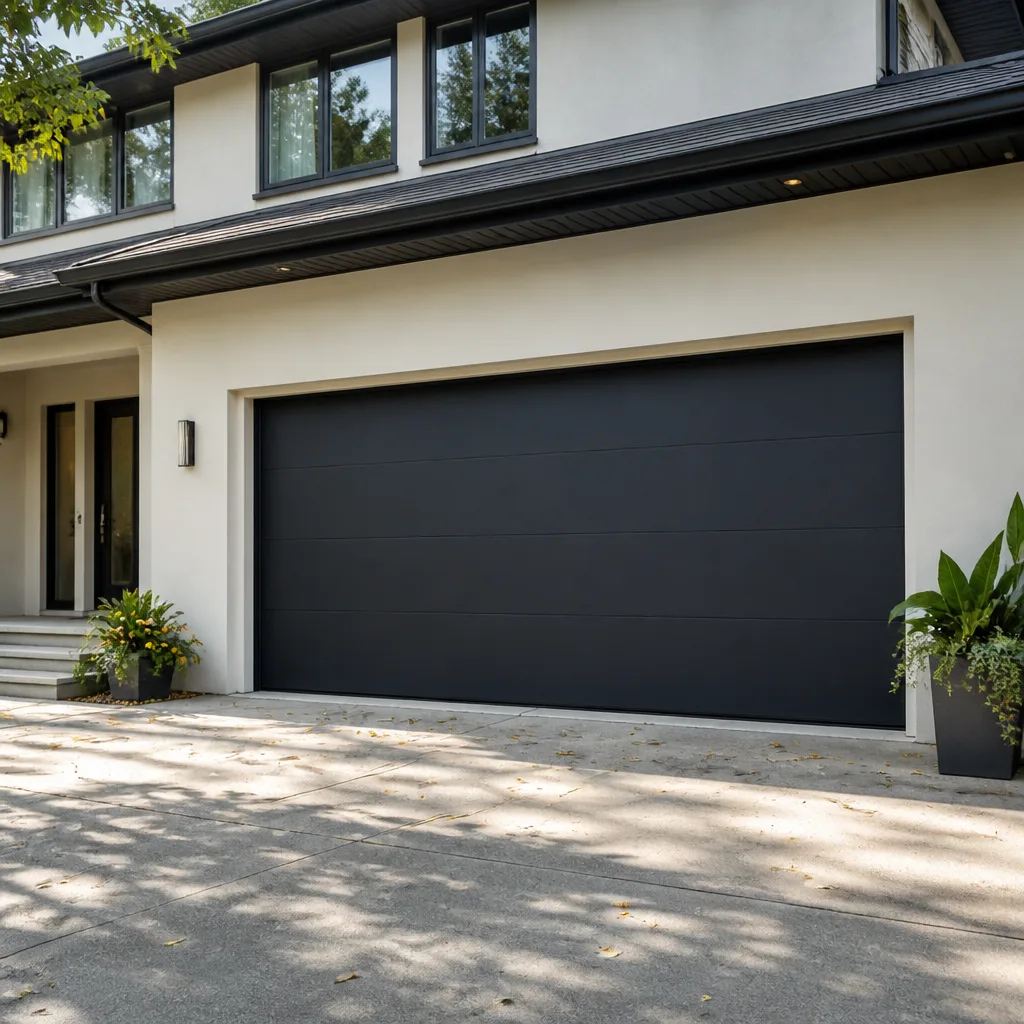 Modern flush
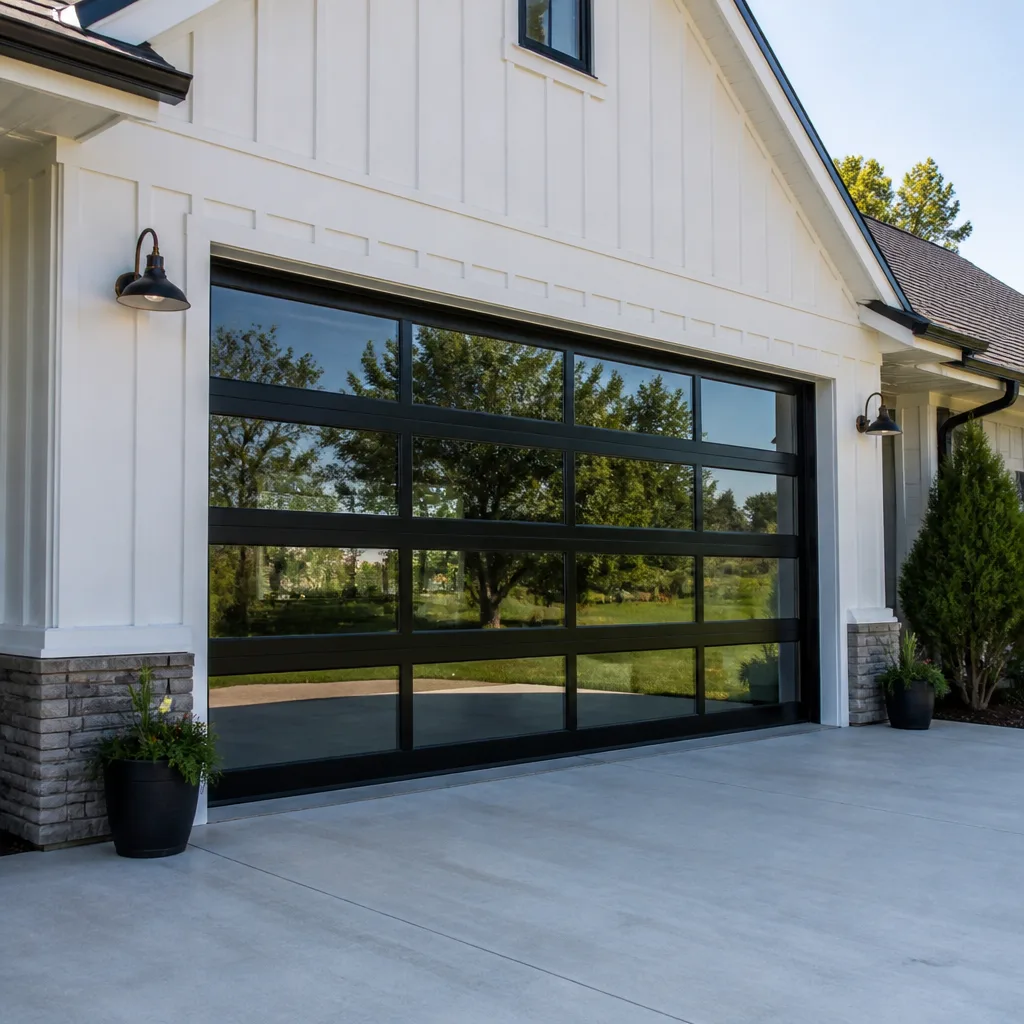 Full-view glass
 LiftMaster openers
 Chamberlain openers
Full 25-point door and opener safety check with every visit - springs, cables, rollers, tracks, and your LiftMaster or Chamberlain opener included
You get a price before we start. It does not change when the pro arrives.
Get your free estimateSeasonal Garage Door Care for East Providence: Year-Round Homeowner’s Guide
Most homeowners in East Providence brace for January, then relax once the coldest week passes. That’s backwards. The hardest weeks on a garage door here are October and March, when temperatures swing across the freezing line and back again, sometimes twice in a day. Sustained cold is steady and predictable. Freeze-thaw is not. It works water into seals, joints, and panel seams, then expands it and pulls things apart. The homeowners who avoid winter repair calls are the ones who spend an hour on the door in October, not the ones who wait until December. This guide walks through what each season actually does to your door, what to check, and which one task per season is worth handing to a technician.
Quick Answer
Seasonal garage door care in East Providence comes down to two focused tune-ups, one in late fall before the first hard freeze and one in early spring after the last thaw, plus a quick monthly visual check. Prioritize the bottom seal, spring tension, and weatherstripping at each transition, because freeze-thaw cycling is what damages them, not steady cold. Springs, cables, and any work involving the torsion system belong with a trained technician.
Styles & brands we work with
- Raised-panel steel
- Carriage house
- Modern flush
- Full-view glass
- LiftMaster openers
- Chamberlain openers
Table of Contents
- Why the Transitions Matter More Than Deep Winter
- The October Prep: What to Do Before the First Freeze
- Winter: What Freeze-Thaw Is Actually Doing to Your Door
- Spring: Reading the Damage a New England Winter Leaves Behind
- Summer in East Providence: Humidity, Expansion, and Binding
- The Paper-Drag Test: Checking Your Seal Every Season
- The One Task Each Season Worth Paying For
- A Simple Monthly Walk-Around
Why the Transitions Matter More Than Deep Winter
Garage doors fail on change, not on cold. A door that sits at 20 degrees for two weeks is under load, but that load is consistent. A door that goes from 45 degrees at noon to 22 degrees at midnight is being asked to expand and contract over and over, and every material in the assembly responds at a different rate. Metal moves fast. Wood moves slowly. Rubber seals move somewhere in between. The result is a slow loosening at every joint where two materials meet.
In East Providence, that swing pattern is normal from late October through early December and again from early March through April. The city sits where inland cold and Narragansett Bay influence trade places, so the freeze line wobbles. Some weeks the door never gets a hard freeze. Other weeks it thaws and refreezes daily. That wobble is harder on hardware than a Minnesota January, because a Minnesota door gets one long freeze and stays there.
What actually happens across a freeze-thaw cycle:
- Bottom seal: moisture collects under the rubber, freezes, and pushes the seal away from the door. Tiny gaps appear at the corners first.
- Wood panels: water enters end grain and seams, freezes, and lifts paint. Repeated cycles open the seam further until the panel starts to cup.
- Springs: torsion springs are under constant tension, and the metal contracts in cold. The cycle of contraction and release adds stress cycles a spring would not otherwise see.
- Cables: drums and cables collect moisture at the bottom brackets, where road splash and meltwater reach them. That moisture sits and works on the cable strands.
- Track and rollers: track steel expands and contracts against the framing, and the fasteners holding it gradually loosen.
- Openers: the lubricant inside the rail and the gear case thickens in cold, so the motor works harder at exactly the moment the door itself is stiffest.
The takeaway is simple. Protect the door going into the first freeze, and inspect it coming out of the last one. Everything between those two points is mostly waiting.
The October Prep: What to Do Before the First Freeze
October prep is the highest-value hour you’ll spend on your garage door all year. The goal is to remove the water and the looseness that freeze-thaw will exploit. If you do this in October, the door enters winter with tight seals, clean tracks, and correct balance. If you wait until December, you’re working in the cold on problems that have already started.
Work through this in order:
- Wash the bottom seal and inspect it. Run a rag along the underside of the bottom rubber and look for cracks, flattening, or spots where the seal has pulled away from the aluminum retainer. A seal that’s already stiff won’t survive a freeze-thaw winter.
- Clear the threshold. Sweep leaves, grit, and any debris out of the channel where the door meets the floor. Trapped debris holds moisture against the seal all winter.
- Wipe the tracks with a damp cloth and dry them. Don’t lubricate the tracks themselves; they need to stay clean. Debris in a track turns to ice and stops rollers.
- Lubricate the moving parts. A garage door lubricant on hinges, rollers, and the torsion spring coils (a light wipe, not a soak) keeps cold-weather movement smooth. This is safe to do by hand.
- Check the balance. With the door closed, pull the opener release and lift the door halfway by hand. It should stay put without drifting. If it sinks or rises on its own, the spring tension needs adjustment, and that’s a technician call.
- Look at the weatherstripping around the frame. The vinyl or brush strips along the sides and top take the same freeze-thaw beating as the bottom seal. Replace anything that’s cracked or compressed.
- Clear gutters and downspouts. Water that dumps off the roof next to the garage door freezes at the threshold and works its way under the seal. This is the single most common October oversight we see.
- Test the safety reverse. Put a piece of wood or a roll of paper towels in the door’s path and close it. It should reverse on contact. If it doesn’t, stop using the door and get the opener looked at.
This whole list is about an hour of homeowner work, and it prevents the majority of what turns into a winter service call. For a full breakdown of what falls under routine professional maintenance versus homeowner care, our garage door repair page covers the scope. Balance checks and spring adjustment in step five are the parts to hand off; the rest you can do with a rag and a can of lubricant.
Winter: What Freeze-Thaw Is Actually Doing to Your Door
Once the door is prepped, winter is mostly about observation. You want to catch small changes before they become spring repairs. The freeze-thaw cycle continues through January and February, but the biggest damage usually happens at the edges of the season.
What to watch in East Providence through the winter:
- Frost on the inside of the door. If you see frost on the interior panel face in the morning, your weatherstripping is letting warm humid air reach cold metal. That’s a seal problem, and it makes the freeze-thaw cycle worse because the moisture is coming from inside.
- A door that closes unevenly. One side reaching the floor before the other is a sign the track or the spring cable tension has shifted. It gets worse as the temperature drops.
- Noise changes. A door that’s suddenly louder, or has developed a clunk at a specific point in travel, is telling you a roller, hinge, or cable is binding. Ignoring noise is how small problems turn into failed hardware.
- Opener strain. If the opener sounds labored or the door hesitates at the start of a cycle, the door is stiff from cold and the opener is compensating. It’s worth having checked before the motor overheats or a gear strips.
- Ice at the threshold. Any ice that forms where the door meets the floor should be chipped away carefully and the source addressed. Standing ice lifts the seal and, over time, warps the bottom panel.
Avoid the temptation to force a frozen door open. If the door is iced to the floor, pulling it with the opener or by hand can snap a cable or pull a bracket out of the framing. Free it with warm water at the threshold or wait for it to release on its own. If the door won’t move after that, that’s a call-in situation.
If the door fails outright in the middle of winter, we handle garage door spring repair as its own dedicated service, because springs and cables are the parts most affected by cold and the parts a homeowner should never touch. For a door that’s simply stopped opening and you need it working, our main page on East Providence Garage Door Repair is the fastest way to get an appointment booked.
Spring: Reading the Damage a New England Winter Leaves Behind
Spring inspection is the second important hour of the year, and it’s more diagnostic than the October prep. You’re not preparing the door for anything; you’re reading what winter did to it. This is where we see the widest range of hidden damage across East Providence homes, from a compressed bottom seal that looks fine until you test it to a spring that has quietly lost tension over the cold months and is now one cycle from failing.
Work through this after the last hard freeze:
- Re-run the paper-drag test around the full perimeter (details in the section below). Winter is the season that degrades seals fastest.
- Inspect the bottom seal for compression set. A rubber seal that spent the winter pressed against a cold floor can take a “set” and stop springing back. If the seal is flat rather than round, it’s not sealing anymore.
- Look at the springs and cables for rust and wear. Bracket plates, cable ends, and the spring coils themselves should be clean. Rust on a spring is a warning sign; a cable with visible fraying or broken strands needs replacement before the door is used again.
- Check the paint on wood doors. Any bubbling or flaking on the bottom panel or around hardware is water that got in during winter. Sand and repaint before summer humidity gets into it.
- Re-check the balance with the manual-release test from October. Spring tension that was correct in fall may not be correct in spring.
- Test the safety reverse and the photo-eye. Cold and moisture affect opener circuits and alignment. The eyes should be aligned and unobstructed, and the door should reverse on contact.
- Look at the track fasteners. If the track has loosened against the framing over the winter, it needs re-securing before the door comes out of alignment.
Two of those items (seal condition and paint) are homeowner work. The spring and cable inspection is a visual check only. Do not adjust, remove, or try to tighten a torsion spring yourself. Springs are under enormous stored tension, and the tools needed to work on them safely are not the ones in a typical home toolbox. Our page on garage door opener repair covers the opener side of spring inspection if you notice the motor working harder after a spring loses tension.
Summer in East Providence: Humidity, Expansion, and Binding
Summer is the gentlest season for garage door hardware, but it isn’t a rest period. Two things change with the warm, humid weather, and both are worth understanding.
Humidity and wood doors. New England summer air holds moisture, and a wood garage door absorbs it through end grain, seams, and any spot where the finish has failed. The door swells slightly. Panels cup. Paint blisters where moisture is trying to escape. Left unaddressed across several summers, the swelling works at the joints until panel seams open for good. Wood doors from makers like Clopay and Amarr both need a finish check each summer, and a fresh coat on the bottom panel and end grain is the highest-value summer task.
Thermal expansion and metal doors. A steel door in direct sun gets hot enough to expand measurably. The door grows slightly taller and wider in the frame, the track steel expands too, and the whole assembly can start to bind. If you notice the door rubbing at one side in July and August, or a roller that squeals only in the afternoon, thermal expansion is the likely cause. A steel door from Wayne Dalton or Amarr in a west-facing opening will show this before a north-facing one will.
The opener load question. Summer is also when openers tend to fail, because the motor is running hot and working against an unseasonably stiff or bound door. If your Genie or LiftMaster opener starts making noise, hesitating, or reversing for no reason, the door is often the cause, not the opener itself. Good diagnosis starts at the door and works back.
- Check the finish on a wood door once in July. Touch-up goes a long way.
- Look for rust blooming on steel panels and hardware. Rust starts small in summer.
- If the door binds in heat, don’t force it. Have the track alignment checked.
- Listen for new noise from the opener in hot weather and treat it as a door symptom.
The Paper-Drag Test: Checking Your Seal Every Season
You don’t need a gauge to know if your garage door is sealing. You need a sheet of paper. This test takes about two minutes and works at every season change.
- Close the door fully and let the opener finish.
- Tear a sheet of paper into strips about an inch wide.
- At the bottom seal, slide a strip under the door until it’s halfway in. Pull it out slowly. You should feel resistance the whole way. If it slides out with no drag, that section isn’t sealing.
- Repeat at four points along the bottom: the two corners and two evenly spaced spots in between.
- Repeat on the sides, sliding the strip between the door edge and the side weatherstripping. Check top, middle, and bottom on each side.
- Repeat around the top edge the same way.
- Note any section where the paper pulls free with no effort. That’s your gap.
Do this test once in October, once in March, and once in July. The comparison between seasons is the useful part. A gap that appears in October and is gone by May is a freeze-thaw artifact and usually means the seal needs to be thicker or the threshold needs adjustment. A gap that stays year-round is a straight replacement. A gap that appears only in summer on a metal door often means thermal expansion is pushing the door away from the seal at the sides, and the fix is alignment, not a new seal.
The paper-drag test is also handy after any door adjustment or new seal installation, as a quick confirmation that the work did what it was supposed to do.
The One Task Each Season Worth Paying For
Most seasonal garage door care is homeowner work, but one task per season is worth a technician, either because it’s dangerous or because doing it wrong causes more damage than not doing it at all.
| Season | Homeowner Task | Task to Hand Off |
|---|---|---|
| Late Fall (October) | Clear threshold, wash seal, lubricate hinges and rollers, test safety reverse | Balance check and spring tension adjustment |
| Winter | Observe, remove ice carefully, listen for new noise | Any opener that’s straining or any door that won’t move |
| Spring (March) | Paper-drag test, seal and paint inspection | Spring and cable inspection, and any tension adjustment |
| Summer | Touch up wood finish, check for rust, note new noise | Track alignment and binding diagnosis |
The pattern is consistent. Any task that involves the door’s stored energy (springs, cables, torsion drum, bottom bracket) or the door’s overall alignment goes to a technician. Any task that involves cleaning, lubricating, painting, or observing is yours to do safely.
Our technicians have up to 8 years of experience, and a good share of that is spent on balance and spring work that homeowners are right to avoid. We work on the brand you already have, whether that’s a Genie opener and an Amarr door or a Clopay door with a Chamberlain opener, so we diagnose the system rather than the symptom.
A Simple Monthly Walk-Around
Sixty seconds a month goes a long way between the two big tune-ups. This is what to look at:
- Open and close the door once by hand (with the opener released) to feel for any new resistance or noise.
- Look at the bottom seal for anything that’s changed: new cracks, a lifted corner, visible daylight.
- Glance at the springs for rust or anything that looks different than last month.
- Test the safety reverse with a piece of wood in the door’s path.
- Check the photo-eyes for alignment and any cobwebs or dirt.
- Wipe the tracks if they’ve picked up grit.
That’s it. If nothing has changed, you’re done. If something has changed and it’s on the spring or cable side of things, that’s when a call makes sense.
Common Mistakes to Avoid
- Waiting until December to prep. By December, the first freeze has already happened and the damage from that first cycle is baked in. October prep is the whole point of this guide; the door needs to enter winter tight and balanced.
- Greasing the tracks. Garage door tracks need to be clean and dry. Lubricant on a track attracts grit and slows the rollers. The lubrication belongs on the hinges, rollers, and spring coils, not the track.
- Replacing the opener when the door is the problem. A door that binds in summer or drags in winter makes any opener look bad. Diagnose the door first; the opener is often the victim, not the cause.
- Ignoring a small seal gap until spring. A gap lets moisture in, and moisture is what freeze-thaw works on. That small gap in November becomes a warped bottom panel by April. Fix it when you find it.
- Forcing a frozen door. Ice at the threshold can be enough to break a cable or pull a bracket. Free it gently or call. Never use the opener to break a frozen door loose.
- Skipping the spring inspection because nothing is broken. Springs fail by losing tension gradually, then suddenly. A visual check in spring is the only early warning you’ll get before the door stops opening.
- Disposing of a paper-drag test result. If the test shows a gap, address it in the same season. A seal that’s put back in service for another year tends to fail at the worst possible time.
These mistakes share a pattern: they’re all choices to delay. The door doesn’t usually break all at once. It gives you clues all year, and the homeowners who act on the clues spend the least on repairs over time.
See the difference
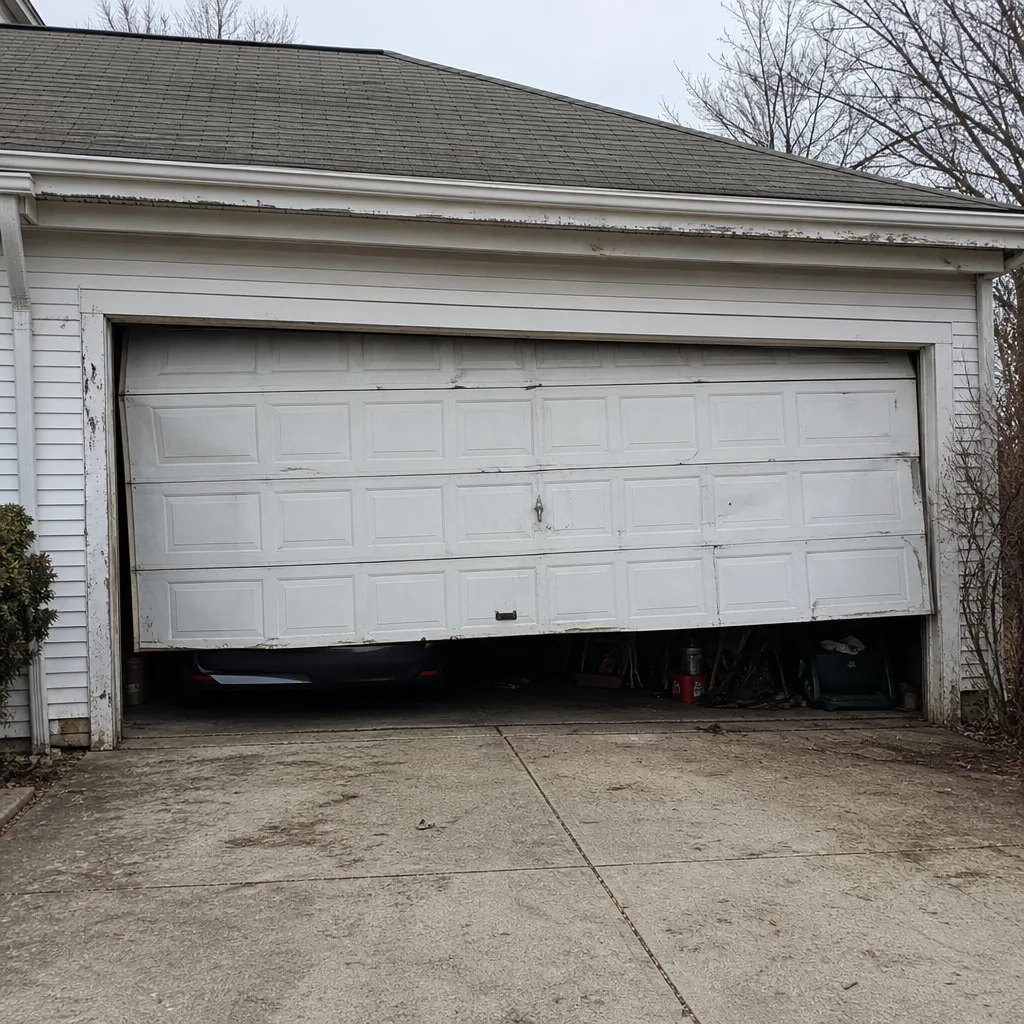 Before
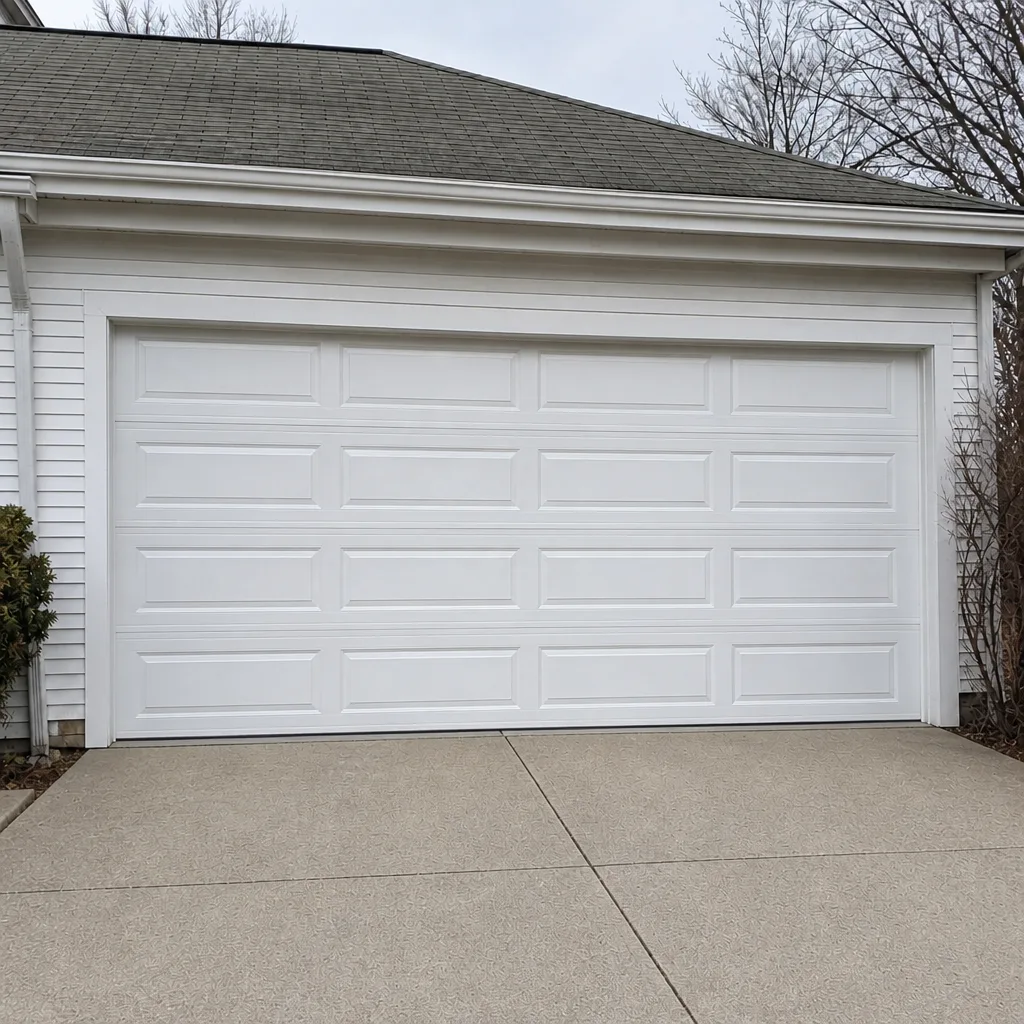 After
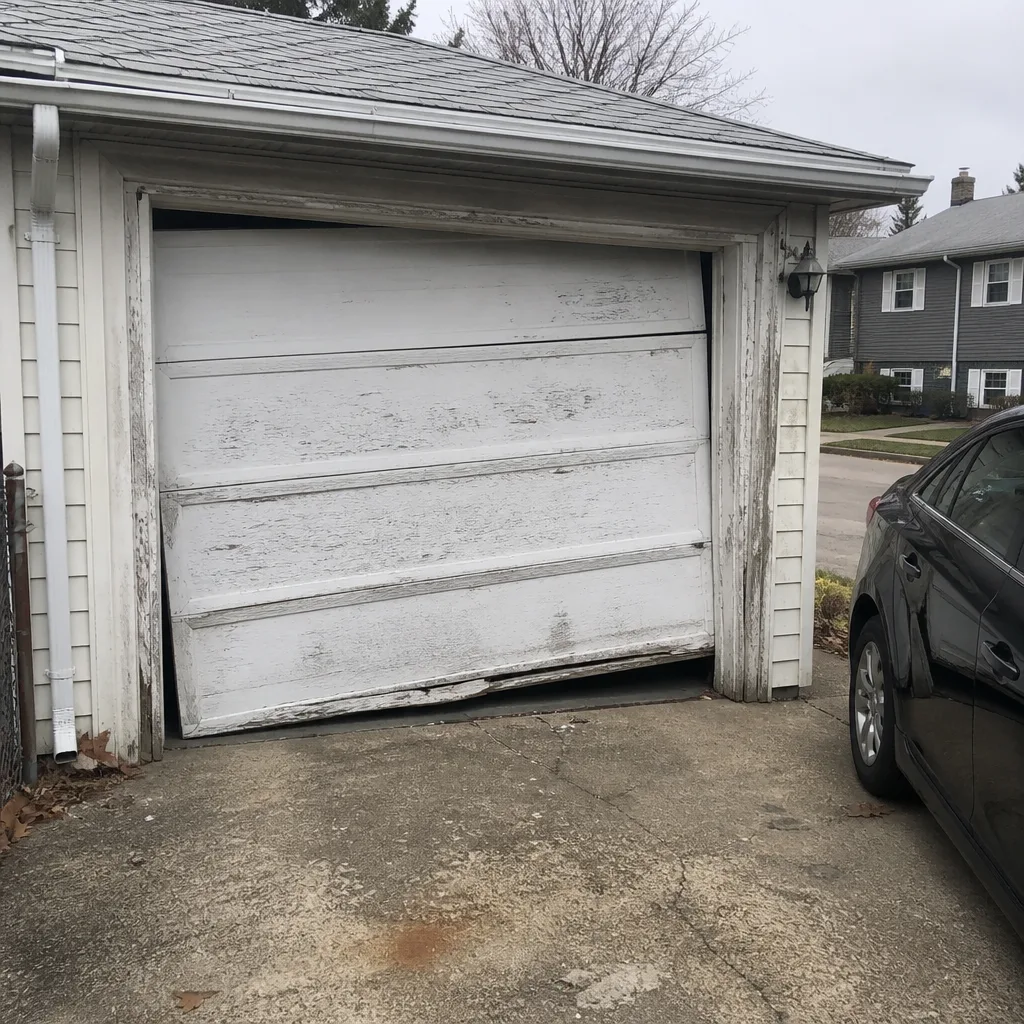 Before
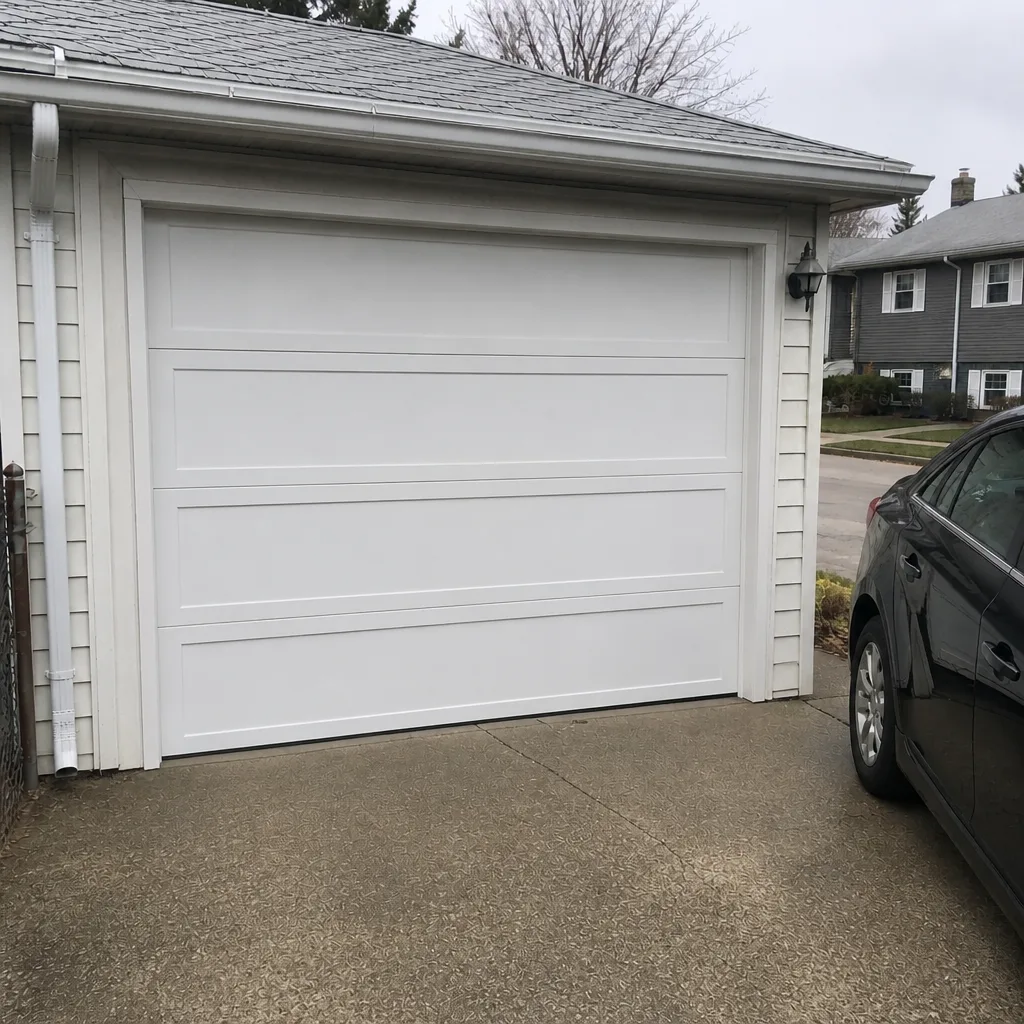 After
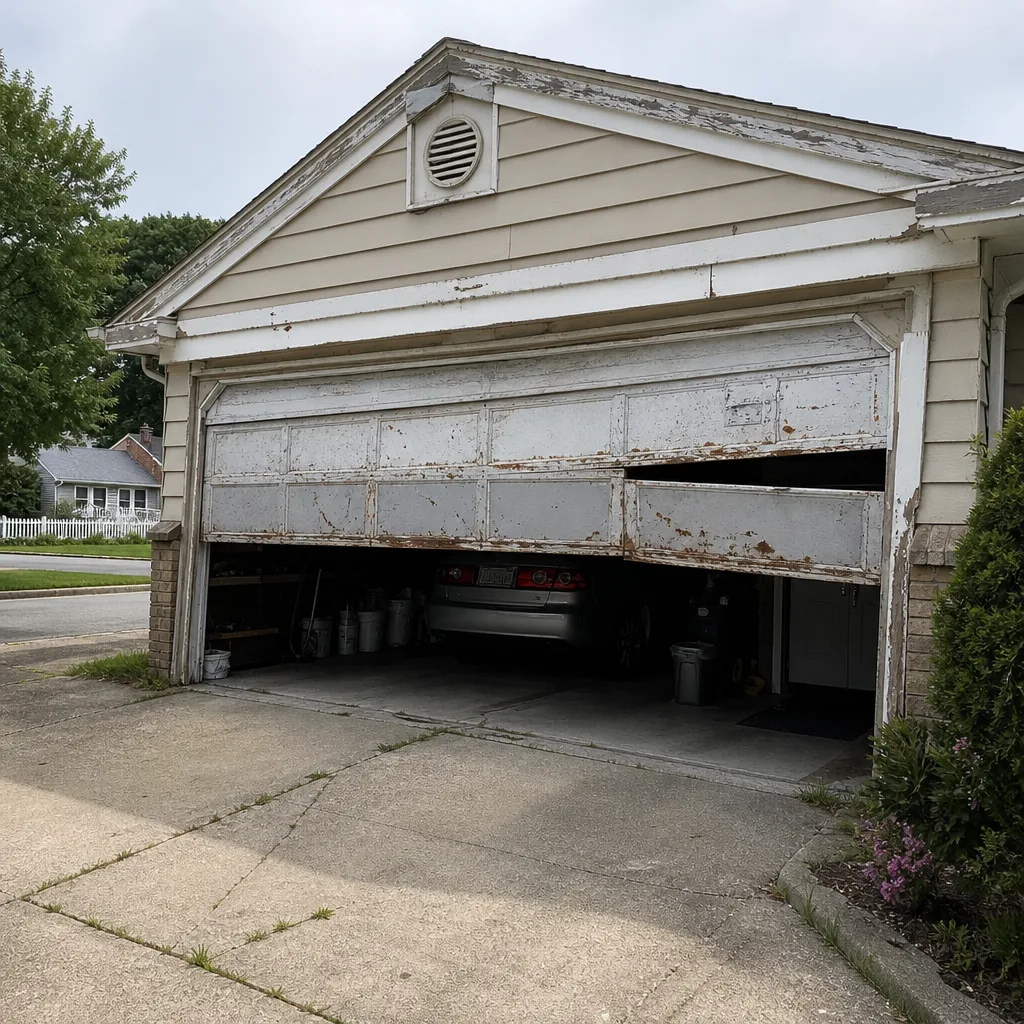 Before
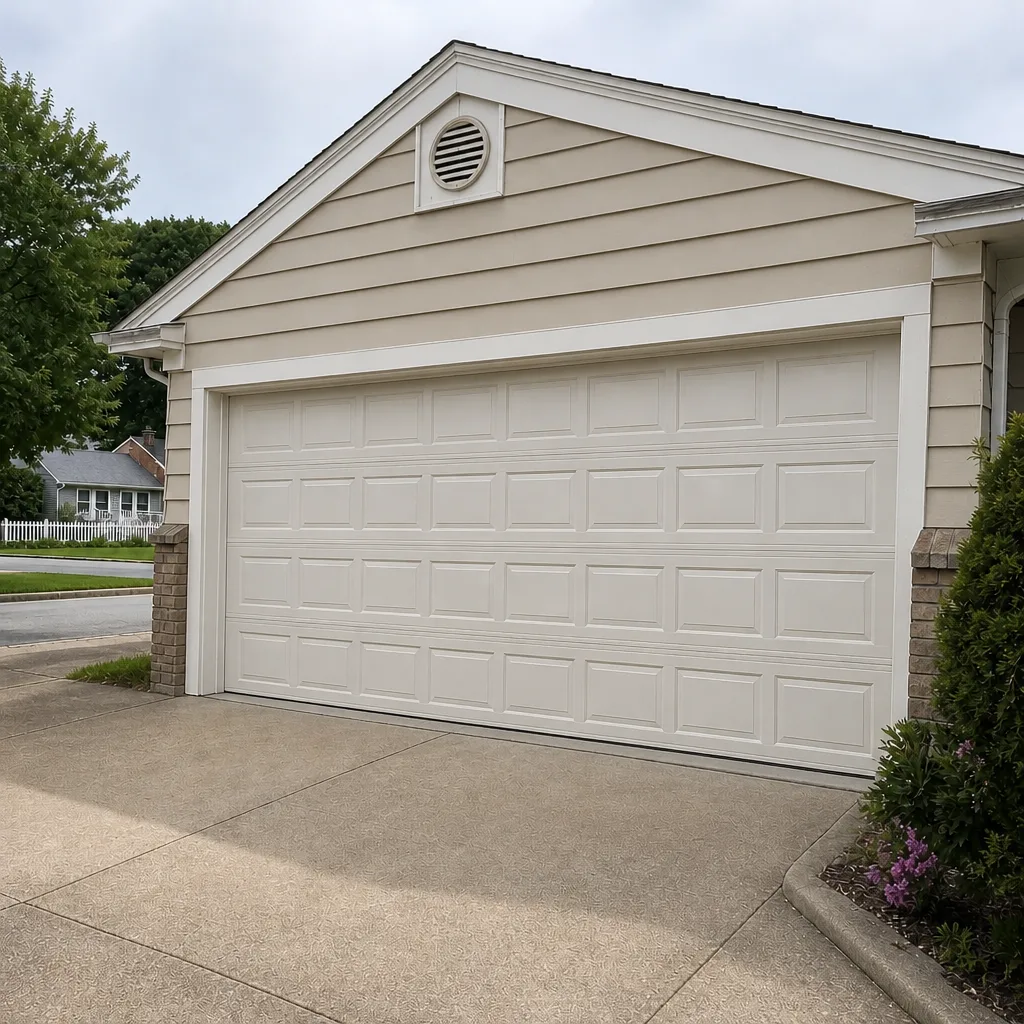 After
When to Call a Professional
Some garage door problems are worth a phone call right away, and it’s better to call early than to diagnose by trial and error. Call a technician if the spring is broken or visibly rusted, if the cable is frayed or has come off the drum, if the door is off balance in either direction, if the door binds or hangs at any point in travel, if the opener has started reversing or straining, or if the door came off track. Any of these is a risk to you and to the door itself, and none of them is a homeowner repair.
For spring and balance issues specifically, the technician is the only safe answer. Springs are stored energy, and the tools and techniques for handling them safely are not typical homeowner equipment. For a door that’s stopped working and you need it sorted quickly, we can help get it booked. East Providence Garage Door Repair offers free estimates in East Providence. Call (855) 648-6750.
Straight answer on price: the estimate is free, and the price is quoted and agreed before any work starts. Whatever the written estimate says is the final price; nothing gets added on once the technician gets to you.
For a door that’s compromised your home’s security because it won’t close, call the phone line. We answer 24/7. Fast dispatch from 7am to 7pm, Sunday through Friday. A call outside dispatch hours is booked into the next opening, Sunday through Friday, 7am to 7pm.
Frequently Asked Questions
Twice a year is the right rhythm for a door in East Providence: a full prep in October and a full inspection in March. Those two tune-ups cover the freeze-thaw transitions, which is when the majority of seasonal damage happens. Between the two, a sixty-second visual check once a month catches anything that’s changing. The one task we’d never have a homeowner do alone at either tune-up is spring adjustment; that stays with a technician.
October, without question. Waiting until winter means the first freeze-thaw cycles have already started, and they’re what damage seals, wood panels, and hardware. If you prep in October, the door enters the cold season with tight seals and correct balance. If you wait, you’re fixing damage that’s already occurred. The October prep is about an hour of work and counts as the single highest-value maintenance task of the year.
Freeze-thaw cycling, not sustained cold, causes most seasonal failures here. The temperature crosses the freezing line repeatedly in late fall and early spring, and each crossing pushes moisture in and pulls joints apart. That repeated cycle is what breaks bottom seals, warps wood panels, and stresses spring tension. Sustained January cold is actually gentler on the door because the door settles into a steady state.
No. Torsion springs store enough energy to seriously injure you if something goes wrong, and safe adjustment requires specific tools and training. This is the one task we strongly recommend every homeowner leave to a technician. What you can do safely is the manual-release balance test: pull the opener release, lift the door halfway, and see if it holds. If it drifts, call for a spring check. Our dedicated garage door spring repair service handles exactly this.
Run the paper-drag test. Slide a strip of paper under the bottom seal and along the sides, and pull it out slowly. If it comes free with no resistance at any point, the seal isn’t sealing there. Do the test in October, March, and July and compare. A gap that’s season-specific usually means alignment; a gap that’s there year-round means replacement. The test takes about two minutes and tells you more than a visual inspection can.
No. Our pricing is set per job by the written estimate, and it doesn’t change based on season or turnaround time. You’ll get a quote before any work begins, and that’s the price. Estimates are free. Call (855) 648-6750 for an exact quote on your door. We answer 24/7, with fast dispatch from 7am to 7pm, Sunday through Friday.
The Bottom Line
Seasonal garage door care in East Providence is really two focused tune-ups and a light monthly habit. Prep the door in October so it enters winter tight and balanced. Inspect it in March to catch what the freeze-thaw season left behind. Between the two, watch for noise, strain, and seal gaps, and address them when you see them. Hand off springs, cables, and any balance or alignment work to a technician; keep cleaning, lubricating, painting, and testing in your own hands. Do that and the door you have will last longer and cost less to keep running than the one you ignore until it fails.
When something on your door has crossed from “needs a look” to “needs a technician,” we work on the brand you already have, from LiftMaster and Chamberlain openers to Clopay, Amarr, Wayne Dalton, and Raynor doors. From a broken spring to a new installation, one call covers it. Call (855) 648-6750 for a free estimate.
Written by the team at East Providence Garage Door Repair.