
Last updated November 23, 2026
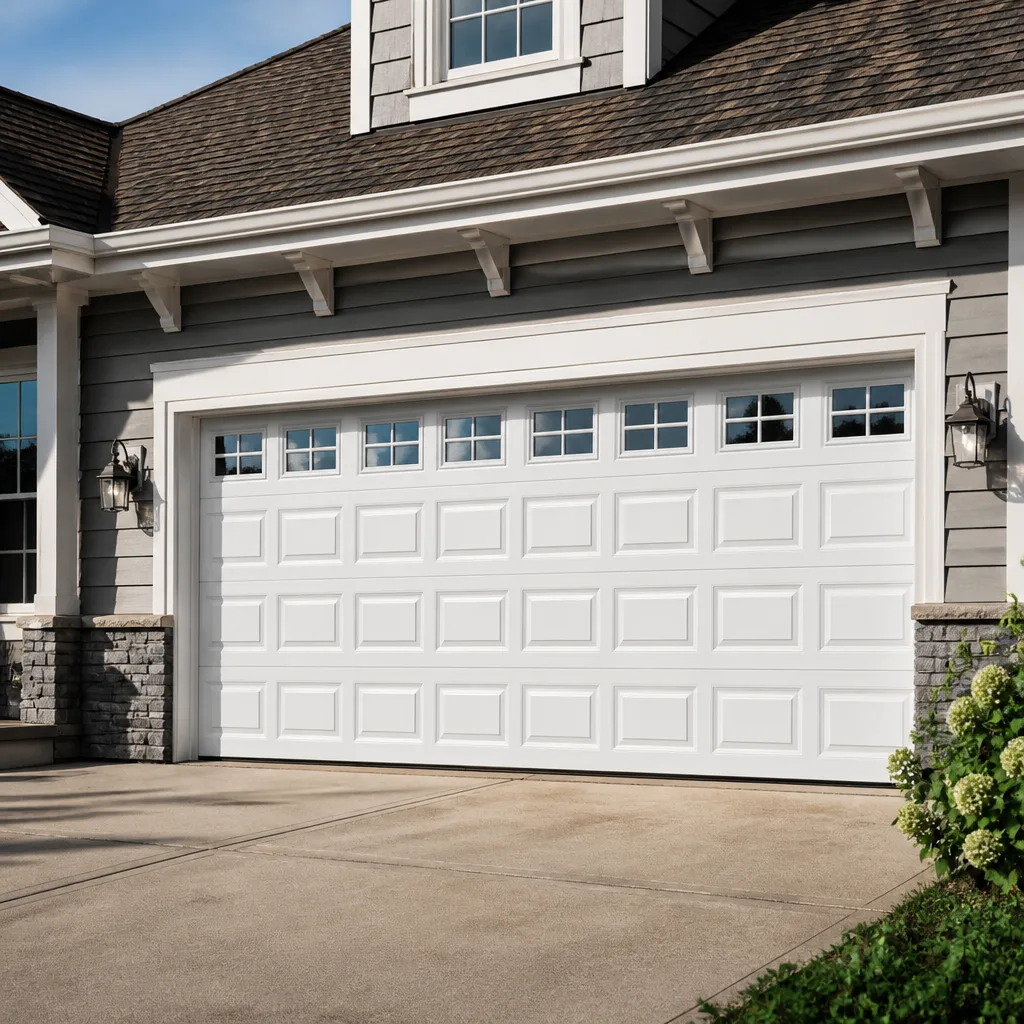 Raised-panel steel
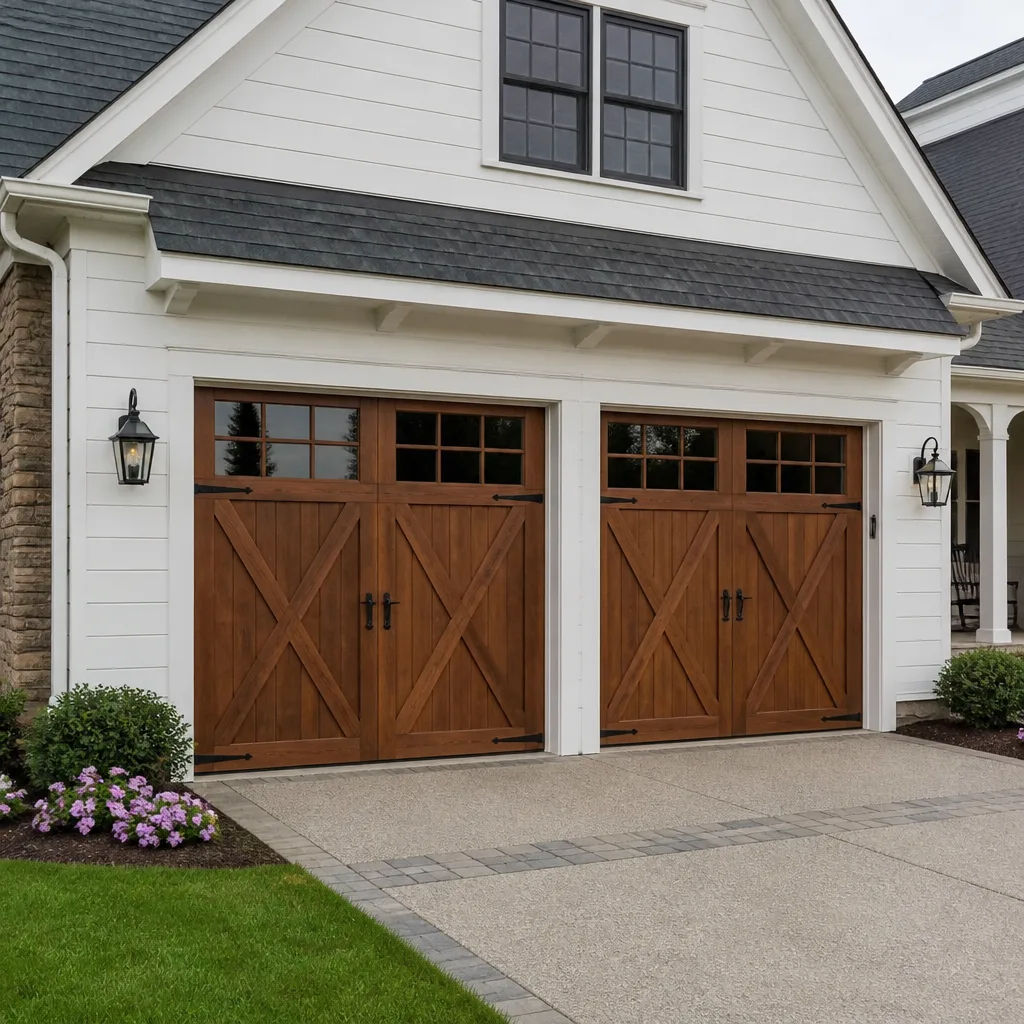 Carriage house
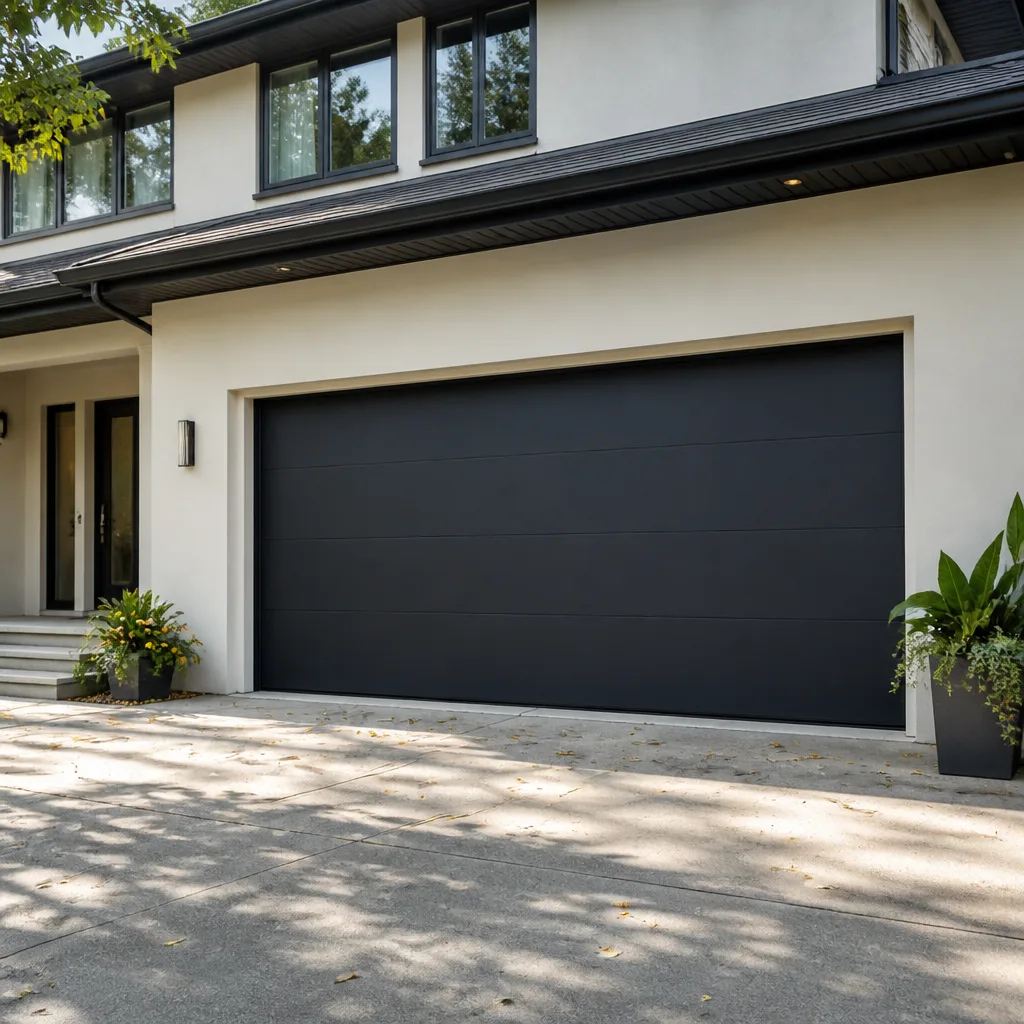 Modern flush
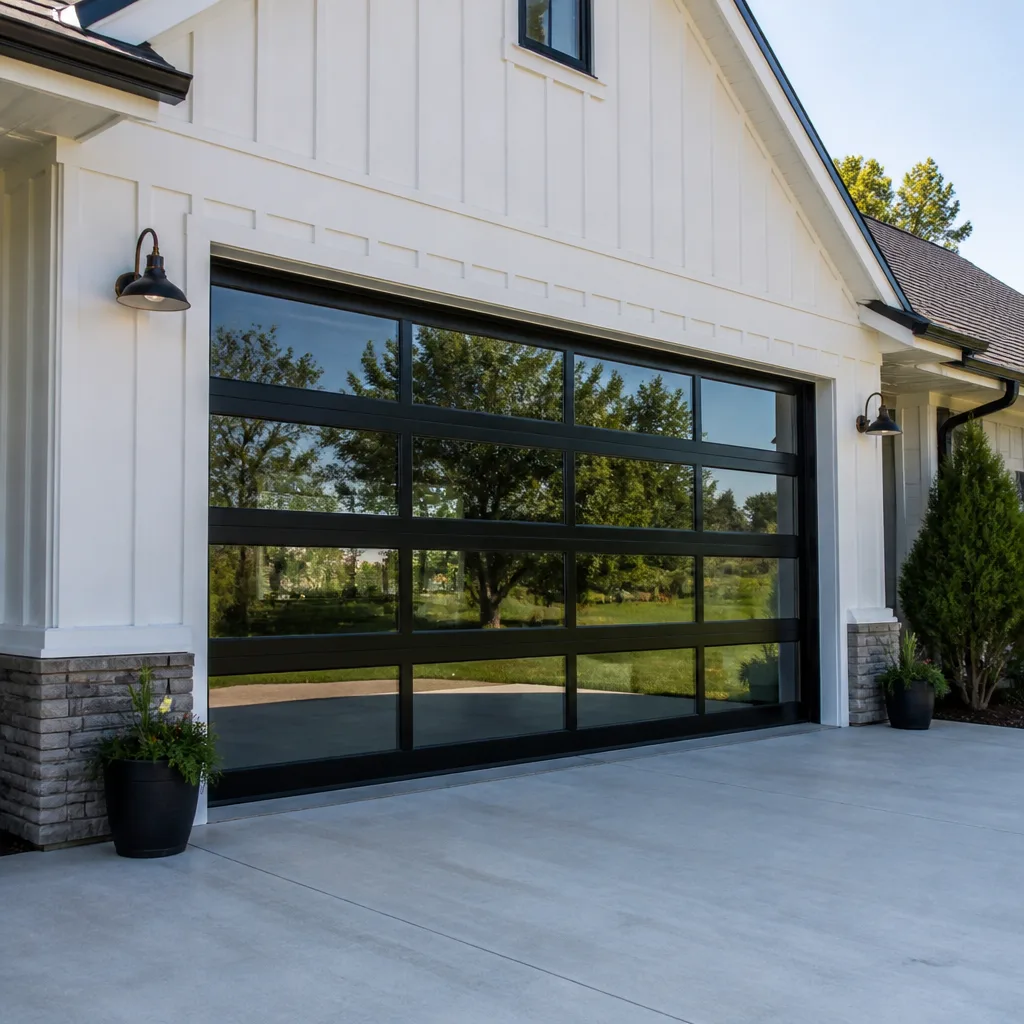 Full-view glass
 LiftMaster openers
 Chamberlain openers
Full 25-point door and opener safety check with every visit - springs, cables, rollers, tracks, and your LiftMaster or Chamberlain opener included
You get a price before we start. It does not change when the pro arrives.
Get your free estimateGarage Door Warning Signs: An East Providence Homeowner’s Reference Guide
Two doors can make noise on the way up and mean completely different things. A grinding sound that comes from a worn steel roller is a cheap fix and safe to live with for a few days. A grinding sound that comes from a torsion spring winding down is the last warning you get before the door stops moving for good. Most warning-sign lists treat both the same way, which is why so many East Providence homeowners wait too long on the serious one and call a technician for something they could have watched for a week. This guide treats every symptom as a starting point for a diagnosis: what it likely means, how urgent it is, whether the door is safe to use, and roughly what the repair runs. Read it once and you’ll know which sounds deserve a phone call today.
Quick Answer
Garage door warning signs fall into four urgency levels: cosmetic (watch it), monitor (plan a repair), fix soon (book it now), and stop using the door immediately. The signs that mean stop right now are a snapped torsion spring, a frayed or hanging lift cable, a door that drops fast on one side, and a bent track the door has jumped out of. Everything else – a squeak, a slow reversal, a sluggish opener – is worth attention but rarely an emergency. When in doubt in East Providence, the safest move is to leave the door down and get a professional opinion before you cycle it again.
Styles & brands we work with
- Raised-panel steel
- Carriage house
- Modern flush
- Full-view glass
- LiftMaster openers
- Chamberlain openers
Table of Contents
- The Symptom-to-Cause Matrix
- What the Sounds Tell You: Worn Rollers vs. a Failing Spring
- Five Things You Can Check Yourself (Safely)
- Why Some Warning Signs Only Show Up in Winter in East Providence
- The Two Signs Homeowners Ignore Until the Repair Gets Expensive
- What Repairs Typically Cost in East Providence
- When to Stop Using the Door and Call
- Keeping a Healthy Door Healthy
The Symptom-to-Cause Matrix
A warning sign is only useful if it points somewhere. The table below maps each common symptom to its most likely mechanical cause and how fast it needs attention. Use it to decide whether you’re making a same-day call or adding the repair to a short list for next month.
- Door reverses before touching the floor – Most likely cause: misaligned or dirty safety sensors, or a sensor lens knocked out of line. Urgency: monitor to fix soon. Usually a sensor adjustment, not a mechanical failure.
- Loud grinding or scraping on the way up – Most likely cause: worn rollers, dry hinges, or a worn opener gear depending on where the sound sits. Urgency: monitor. Safe to use briefly while you book the repair.
- Door opens partway then stops – Most likely cause: a failing torsion spring, a binding track, or an opener hitting its travel limit. Urgency: fix soon to stop now depending on whether the door drops.
- Loud bang from the garage, door won’t lift – Most likely cause: a torsion spring has snapped. Urgency: stop using the door now.
- Door is crooked or sags on one side – Most likely cause: a stretched or broken lift cable, or a broken spring on one side. Urgency: stop using the door now.
- Door jumps, jerks, or comes off the track – Most likely cause: bent track, worn rollers, or debris in the track. Urgency: stop using the door now.
- Opener runs but the door doesn’t move – Most likely cause: broken spring, snapped cable, or a disengaged opener trolley. Urgency: fix soon, faster if the door is open and won’t close.
- Door closes and immediately reopens – Most likely cause: something in the sensor path, a sensor misalignment, or a travel-limit setting drift. Urgency: monitor to fix soon.
- Door slams shut or won’t stay up – Most likely cause: spring tension loss or a failing opener. Urgency: stop using the door now.
- Squealing or squeaking that changes with weather – Most likely cause: dry hinges, rollers, or a seal dragging. Urgency: cosmetic to monitor.
Notice that only a few of these mean “leave it alone.” Most mean “get it booked.” The danger line is anything that involves the springs, cables, or the door’s balance, because those are the parts that control the door’s weight and the parts that fail violently. Our garage door repair team sees that line crossed more often than any other.
What the Sounds Tell You: Worn Rollers vs. a Failing Spring
Sound is the hardest warning sign to interpret because the same word – grinding – gets used for two very different problems. The difference is location and rhythm. Here’s how to tell them apart.
Worn roller: the noise comes from the sides of the door, at the track, and it changes as the door moves up or down. It’s a dry, metallic grind or a rhythmic tick that speeds up as the door opens. The door still moves smoothly and stays level. This is a safe-to-use-briefly situation. Rollers cost little and don’t affect the balance of the door, so you can book the repair next week without risk. The same applies to hinge squeal and squeaky torsion tubes.
Compromised spring: the noise comes from the center bar above the door, or there’s a single loud bang followed by silence and a door that doesn’t move. A torsion spring under load doesn’t grind gradually – it snaps. If you hear a bang from the garage and the door won’t lift, the spring has likely broken. A stretched extension spring will also bang, and sometimes the door will slam down hard. Either way the door is out of balance, and the opener is now the only thing holding it, which is a recipe for a stripped gear. Stop using the door.
The plain version: noise from the sides – safe to keep using, book a repair soon. Noise from the center bar or a single loud bang – stop using the door and call us. If you’re not sure which side you’re hearing, don’t guess. Go read the next section, then call.
Springs are the most dangerous part of any garage door and the most commonly mishandled repair. We handle them so you don’t have to, and we don’t walk customers through adjusting tension over the phone. If the spring is the issue, that’s a job for a trained technician.
Five Things You Can Check Yourself (Safely)
You don’t need to touch anything under tension to do a useful inspection. These five checks are visual only. Do them with the door closed and the opener disconnected from the door (the emergency release cord pulls the trolley free) – do not put your hands near the springs, cables, or track joints.
- Look at the springs above the door. A healthy torsion spring is one continuous coil. A gap in the coil, or a spring hanging loose and separated, is a broken spring. Normal is a tight, even coil. Abnormal is any gap, segment, or dangling piece.
- Look at the cables. Run your eye along the cables that run down each side of the door. Normal is a taut, even cable with no fraying. Abnormal is a cable that looks fuzzy, twisted, kinked, or is hanging off the drum. Frayed cables should be replaced before they snap, not after.
- Look at the track alignment. Stand back and sight down each vertical track. Normal is a straight line, parallel to the door edge, with a small even gap between track and roller. Abnormal is a bend, a dent, or a track that curves away from the door. A bent track is why doors jump.
- Look at the rollers. Normal rollers are round wheels with no flat spots and no visible cracks. Abnormal is a chipped, flat-spotted, or missing roller. This is a low-risk problem but it wears the door edge and the track faster.
- Test the balance, cautiously. With the door closed, pull the release cord and lift the door by hand about halfway, then stop and hold it. Normal is a door that stays put or drifts slowly with light pressure. Abnormal is a door that slams down, feels extremely heavy, or won’t stay up. Don’t fight it if it feels wrong – let it down and call.
That last check is the single most useful balance test a homeowner can do, because it catches spring tension loss before the opener does. If a door that used to be easy suddenly feels like lifting a truck, the springs have lost tension and the opener is now doing work it wasn’t designed for.
Why Some Warning Signs Only Show Up in Winter in East Providence
East Providence winters are a real factor in garage door symptoms. Cold weather shrinks materials, stiffens seals, and thickens lubricant, which throws off doors that were fine all summer. Some of what you notice in January isn’t a failing part at all – it’s a seasonal adjustment. Knowing which is which saves you a service call.
Signs that are usually seasonal, not failures:
- Door reverses or stops near the floor. The bottom rubber seal can freeze to the concrete or stiffen enough that the opener’s resistance setting trips. Thawing it and clearing ice from the threshold often solves it. If it continues after the seal is clean and pliable, that’s a sensor or travel-limit issue worth a call.
- Opener feels slow or sluggish. Cold oil in the opener gear train and stiff lubricant on the hinges slow everything down. A light re-lube on the hinges and rollers is usually enough. If the opener still strains after that, the motor may be drawing high current – a warning sign, not a seasonal norm.
- Squeaks and groans that appear only on cold mornings. Dry hinges and rollers complain loudest below freezing. This is cosmetic to monitor, not urgent.
- Door doesn’t quite close all the way. Snow or ice under the door, or a swollen seal, can stop the door before the safety reverse engages. Clear the threshold and test.
Signs that are not seasonal and need a professional: any bang from the center bar, any frayed cable, any door that drops on one side, any opener that runs but the door stays put. Cold doesn’t cause those; it just reveals them.
One more local note: East Providence has a lot of older homes where the garage was added or retrofitted decades after the house was built. Those doors tend to run on narrower tracks and older opener models, and cold weather exaggerates the wear faster. If your opener is a Chamberlain or Genie from the 1990s or 2000s, expect it to show strain earlier in the winter than a newer unit would. Our garage door opener repair technicians are trained to diagnose by the actual system – LiftMaster, Chamberlain, Genie, Clopay, Wayne Dalton, Craftsman, Raynor, and Amarr – because the travel limits and resistance settings differ by brand.
The Two Signs Homeowners Ignore Until the Repair Gets Expensive
In our experience, two warning signs get skipped more than any others because they develop slowly and never announce themselves with a bang. Both lead to the most expensive category of repair if left alone.
1. Cable wear. Garage door lift cables are braided steel, and they don’t snap all at once. They fray first, usually right at the drum at the top of the door or near the bottom bracket. A frayed cable is a few short strands away from a snap, and when a cable goes, the door drops on one side – bending the track, damaging the panel, and sometimes injuring whoever is nearby. Inspecting the cable for fraying during a seasonal check is one of the cheapest habits a homeowner can build. We replace worn cables before they fail. Don’t try to rewind a cable yourself; that’s a job for a trained technician because the cables are under spring tension.
2. Opener motor strain. The opener’s job is to lift a balanced door. When the door is out of balance, the opener takes on the extra weight and starts to strain. You’ll hear it as a labored, louder motor, or the opener will run a second longer than it used to. The strain isn’t the real problem – it’s the symptom of a spring or roller problem upstream. But a straining opener will eventually burn out its gear train or control board, which is a much bigger repair than a spring adjustment. If your opener sounds tired, the door is telling you something. Diagnosing the system rather than swapping the opener is what keeps the repair small.
Both of these have the same fix: check them during normal season changes, not after the door stops working. The door will be down (or stuck halfway) at the worst possible time, and the repair will be bigger.
What Repairs Typically Cost in East Providence
We can’t quote a garage door repair without seeing the door, because the price depends on the spring type, door weight, and whether the damage is isolated or spread across several parts. What we can do is give you a realistic range so you know whether a quote is in the ballpark. The numbers below are typical estimates for the East Providence market, not fixed prices. The written estimate sets the final price, and we quote and agree it before any work starts.
- Safety sensor adjustment or realignment: usually at the low end of the repair scale. Often the simplest fix in this guide.
- Roller or hinge replacement: a modest repair, often done as a set.
- Cable replacement: priced per cable, and the range depends on whether the drum or bottom bracket also needs repair.
- Torsion spring replacement (one spring): a mid-range repair. A matched pair is usually replaced together, so a pair costs about twice the single-spring figure.
- Track straightening or replacement: mid-range, depending on whether the panel is damaged.
- Opener repair or replacement: varies widely by brand and whether the gear, board, or motor needs work.
For the spring side specifically, our garage door spring repair service is a dedicated job, not an add-on. We can’t quote a pair over the phone without knowing the door. What we can do is give you an honest estimate on site, and we don’t add to it once the door is open. If you want to know whether your symptom is a sensor adjustment or a spring, call us. Estimates are free.
One thing that catches homeowners: a repair that looks isolated often isn’t. A snapped spring usually takes a roller or a cable with it when the door drops, and a bent track means the door jumped, which usually means the rollers were shot first. Our East Providence Garage Door Repair team diagnoses the whole door so you don’t pay for a surprise second visit.
When to Stop Using the Door and Call
The line between “watch it” and “stop” is the balance of the door. Any symptom that suggests the door’s weight is no longer controlled by the springs and cables is a stop-using-the-door situation. Here’s the list:
- The door won’t lift at all and the opener just hums. Likely broken spring – stop.
- You heard a loud bang from the garage. Likely snapped spring – stop.
- A cable looks frayed, hanging, or off the drum. Stop – a snap is imminent.
- The door is visibly crooked, sagging on one side, or hanging low on one corner. Stop.
- The door has come out of the track. Stop – don’t try to push it back in.
- The door slams down or won’t stay up. Stop.
If the door is open and won’t close, you have a security problem as well as a mechanical one. Don’t force it down; call.
When your door won’t move, we move fast. Call (855) 648-6750. We answer 24/7. Fast dispatch from 7am to 7pm, Sunday through Friday. Same-day service is often possible for urgent failures that compromise home security or access. If the call is outside our dispatch hours, we’ll book you into the next opening.
For spring failures and cable issues, please don’t attempt a repair yourself. The springs and cables on a garage door are under high tension, and a mistake can cause serious injury. That’s why our spring service exists as its own specialty – it’s one of the most technically demanding and safety-critical repairs in the trade.
Keeping a Healthy Door Healthy
A garage door is mostly a mechanical system that rewards a little attention. The simplest defense against every warning sign in this guide is a twice-a-year visual check and a light lubrication of the moving metal parts. Here’s a short routine.
- Twice a year: sight down the tracks, check the cables for fraying, look at the spring coil for gaps, and test the balance with the release cord.
- Once a year: lubricate hinges, rollers, and the torsion tube with a proper garage door lubricant (not WD-40). Keep the track clean and free of grit.
- After a big wind storm: look for a bent track or a roller that’s popped out.
- Before winter: check the bottom seal for cracks and clear the threshold of debris. A clean, pliable seal is the first defense against winter reversal problems.
- When you notice a change: trust it. Doors don’t “settle in” – if the door is louder, slower, or heavier than it was last year, something has worn.
If you’d rather have a trained eye do the walkthrough, that’s what we do. Our technicians have up to 8 years of experience and work on all eight of the major brands, so they can diagnose your door whether it’s a newer Clopay or an older Craftsman still going strong. A free estimate on a repair is one call away.
Common Mistakes to Avoid
- Pushing the door up by hand when the opener won’t lift it. If the spring is broken, the door is far heavier than a person can safely manage, and it can drop on you. Leave it down and call.
- Trying to adjust a torsion spring yourself. This is the single most dangerous DIY choice on this list. The springs are under high tension; a slip can break a bone. Don’t do it.
- Assuming a reversing door means a broken sensor. Sometimes it does. Sometimes it’s a frozen seal, a travel-limit drift, or a board fault. Check the sensor path first, then call if it persists.
- Ignoring a frayed cable because the door still opens. Cables don’t fail gently. A frayed cable that snaps bends the door and can hurt someone nearby. Replace it early.
- Lubricating with the wrong product. WD-40 is a solvent, not a lubricant, and it strips the grease off the moving parts. Use proper garage door lubricant.
- Assuming a slow winter opener means a new opener. In East Providence, a sluggish opener in January is often cold lubricant and a stiff seal. Re-lube and clear the threshold before you replace the opener.
- Replacing the opener when the door is out of balance. If the door is heavy because the springs have lost tension, a new opener just strains sooner. Fix the balance first.
See the difference
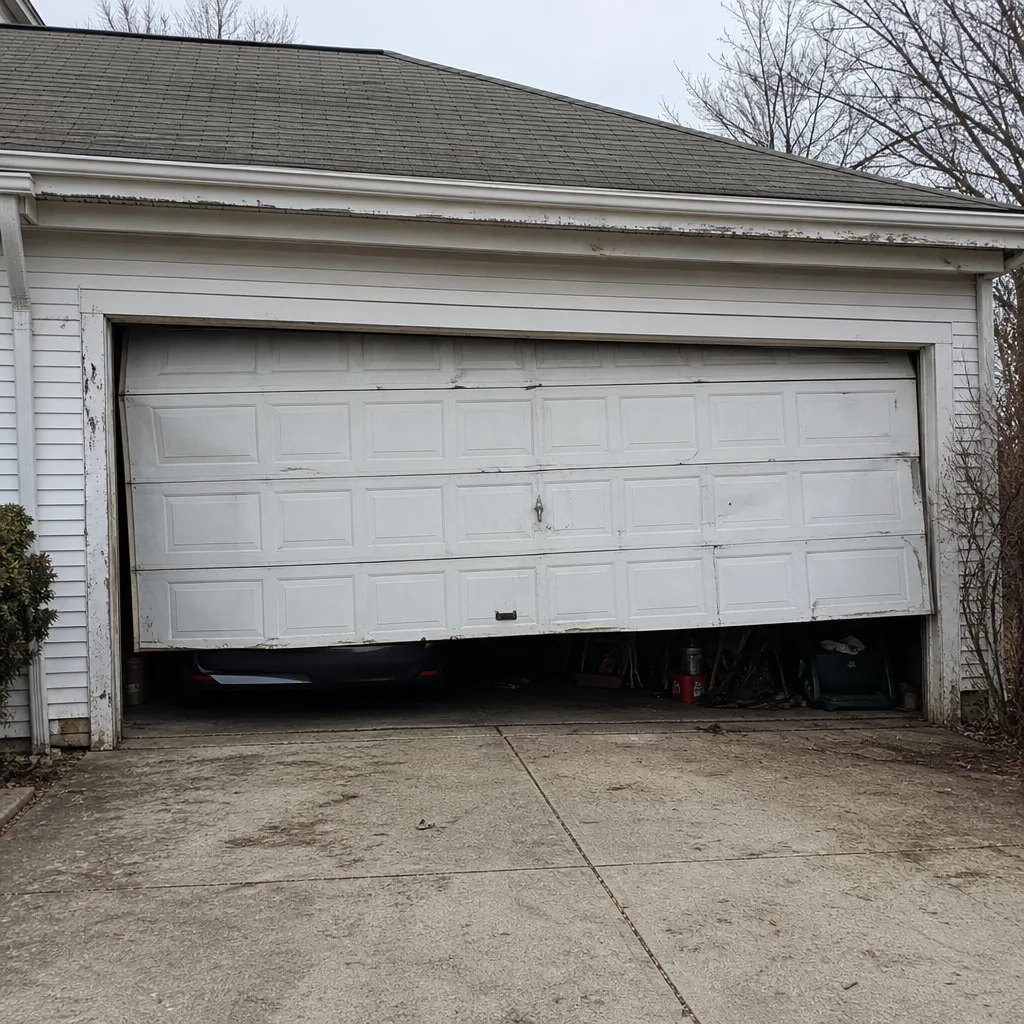 Before
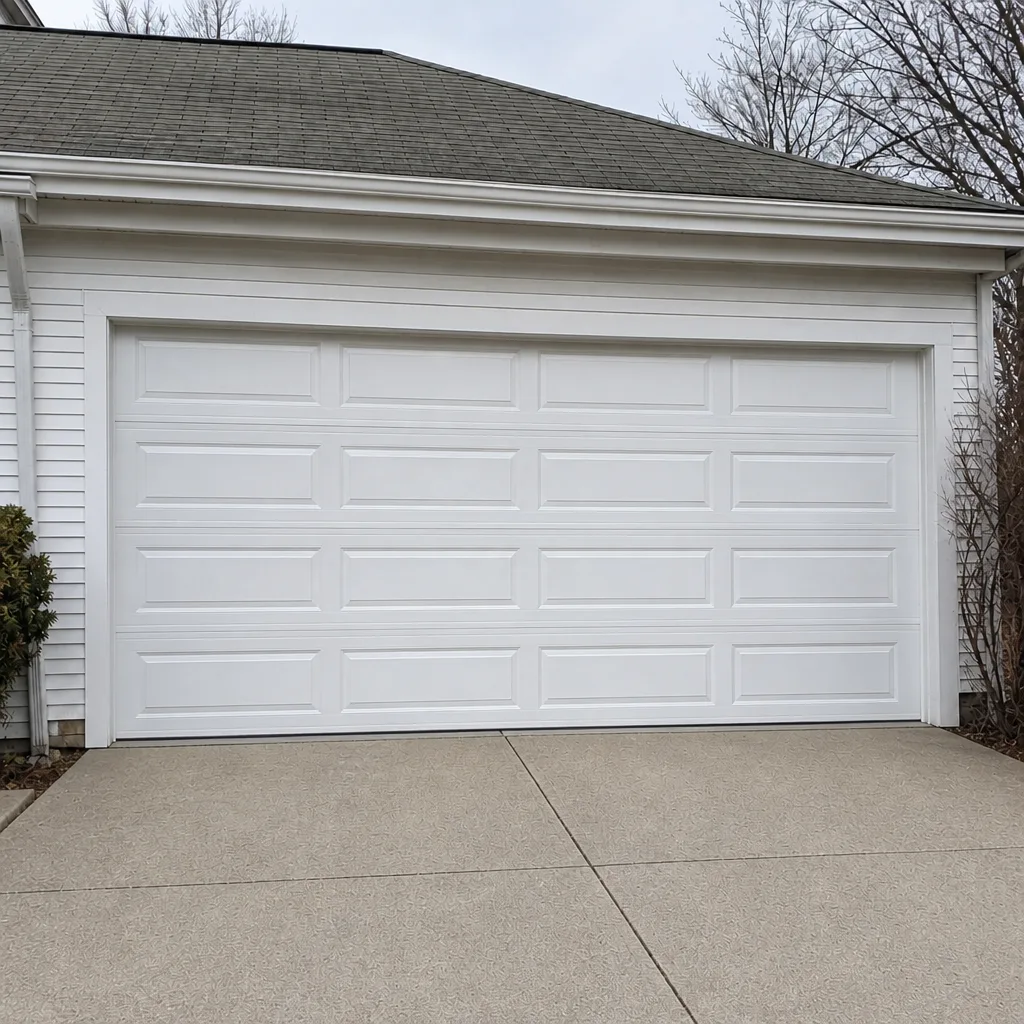 After
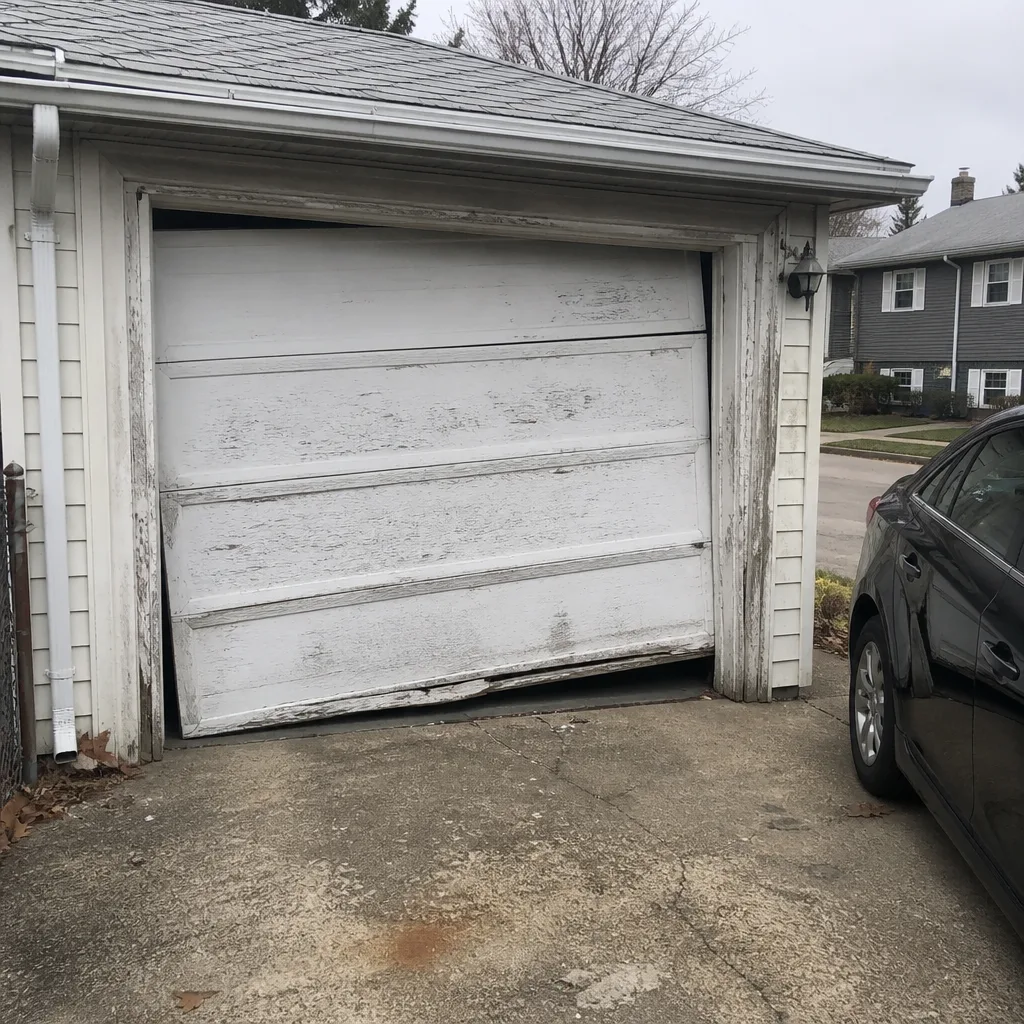 Before
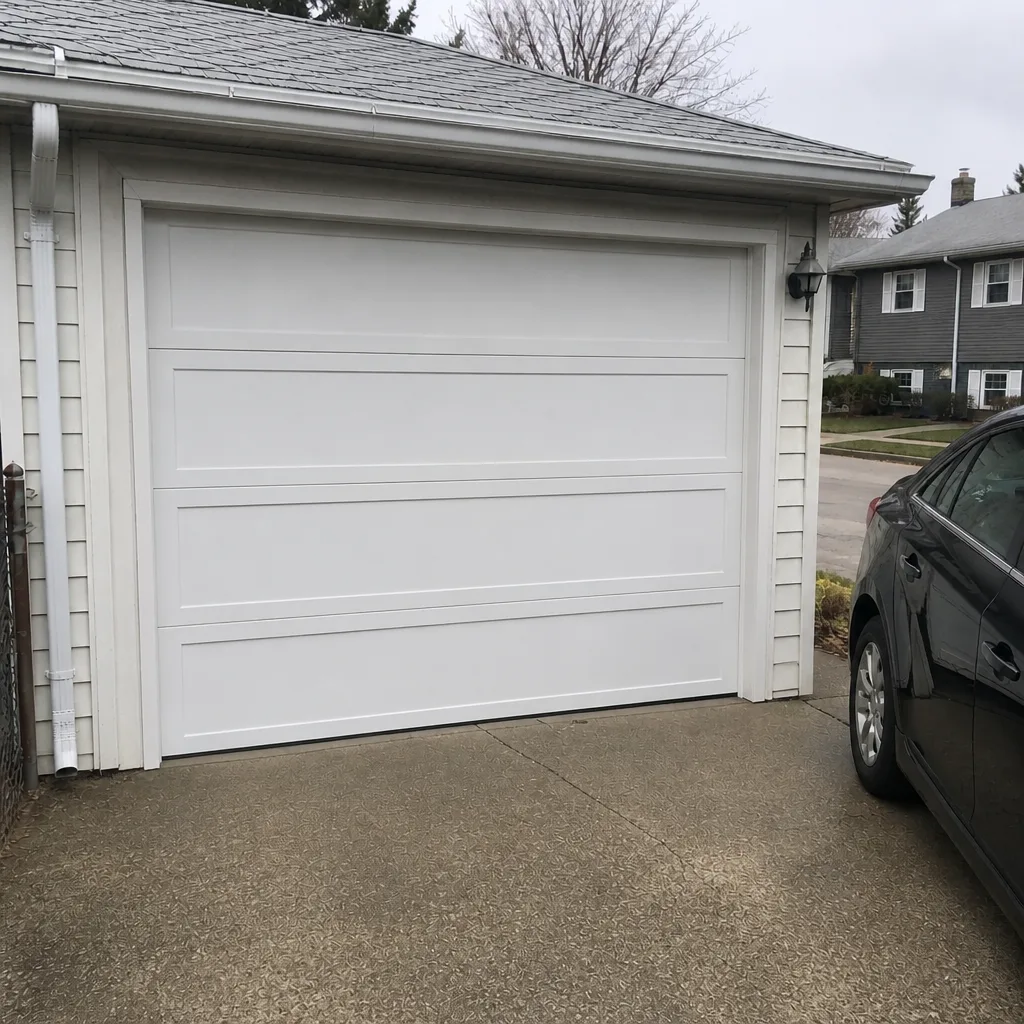 After
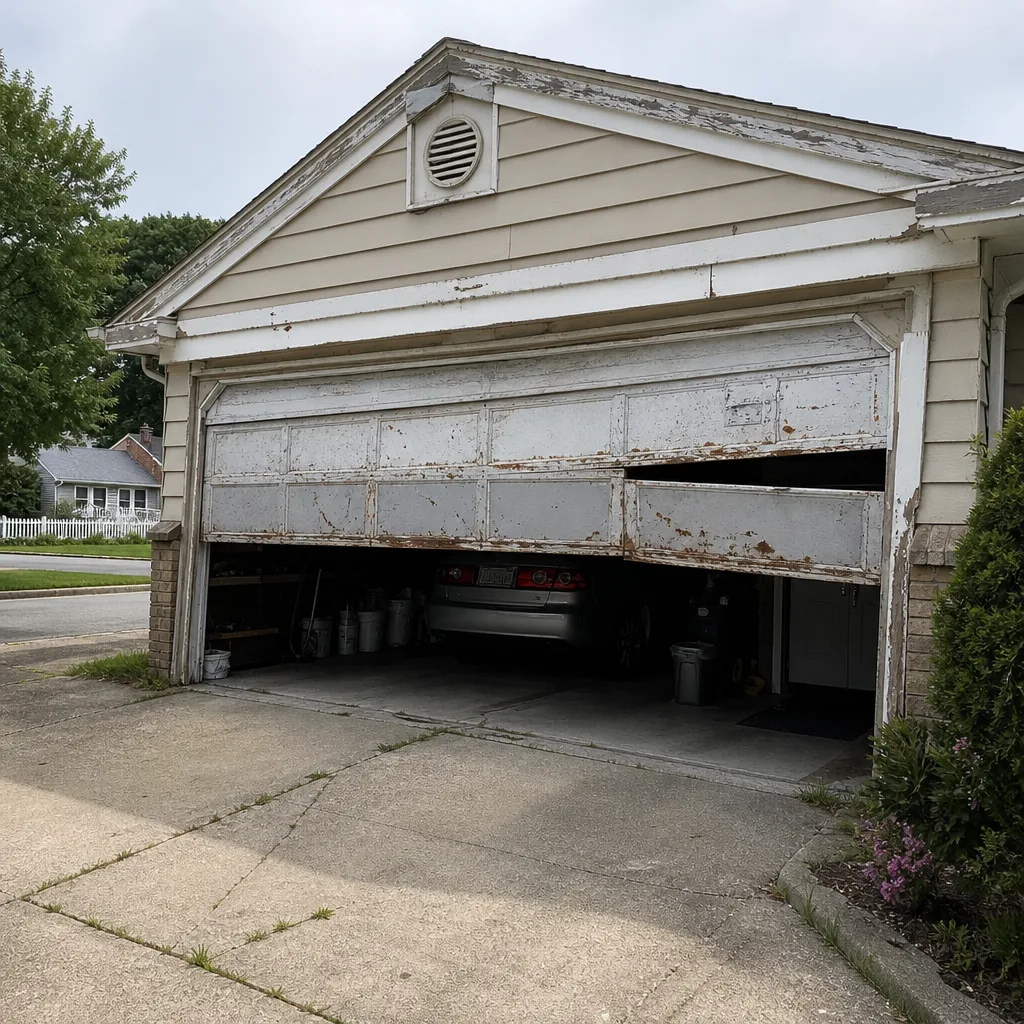 Before
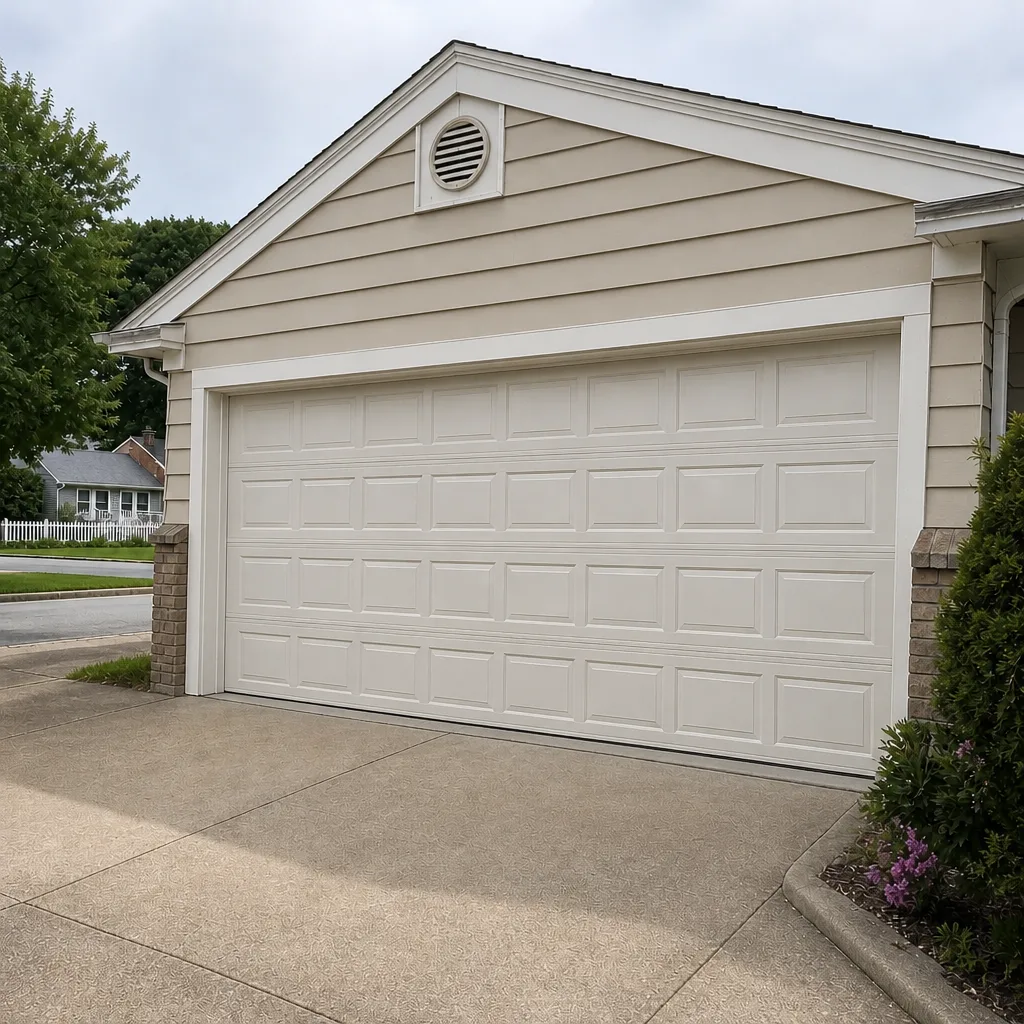 After
When to Call a Professional
Call a professional when the symptom involves the springs, the cables, the door’s balance, or a track the door has jumped out of. Call if you’ve heard a bang, if the door is crooked, if the door drops fast, or if the opener runs but the door doesn’t move. Call if a cable looks frayed. These aren’t jobs to diagnose from a warning-sign guide alone, because the danger is in the parts you shouldn’t touch.
East Providence Garage Door Repair offers free estimates in East Providence – call (855) 648-6750. We answer 24/7. Fast dispatch from 7am to 7pm, Sunday through Friday. Same-day repair is often possible for urgent issues. From a broken spring to a brand-new door, one call covers it.
Frequently Asked Questions
The most common are a door that reverses before hitting the floor, a grinding or scraping sound on the way up, a door that opens partway and stops, and a door that feels heavier than it used to. In East Providence, a lot of these show up first in winter, when cold stiffens seals and lubricant. Any of them is worth a check; a loud bang or a frayed cable means stop using the door and call.
A broken torsion spring usually announces itself with a loud bang from the garage and a door that won’t lift. Look at the spring above the door: a healthy torsion spring is one continuous coil, and a broken one shows a gap or a hanging segment. If the door won’t lift and the spring looks separated, stop using the door and call (855) 648-6750. Don’t try to lift the door by hand.
It depends on where the grinding comes from. Grinding from the sides of the door, at the track, is usually a worn roller or hinge and is safe to use briefly while you book the repair. Grinding from the center bar above the door, or a single loud bang followed by no movement, points to a spring and means stop using the door until a technician sees it. If you’re unsure which sound you’re hearing, leave the door down and call.
Cold shrinks seals, stiffens lubricant, and thickens grease, which makes doors reverse near the floor and openers feel slow. Those are seasonal adjustment issues in most East Providence homes, solved by clearing the threshold and re-lubricating hinges and rollers. But cold only reveals spring and cable problems that were already there – if a bang or a sagging door shows up in winter, that’s not seasonal. Call for an assessment.
No. Garage door cables are under spring tension, and a slip can cause serious injury and damage the door. Frayed or hanging cables should be replaced by a trained technician. Call (855) 648-6750 and we’ll give you a free estimate on the repair.
The written estimate sets the final price, and we quote and agree it before any work starts. If we find more damage than expected, we tell you what the extra work costs before we begin – we don’t add to the invoice after the repair. Free estimates in East Providence, so call (855) 648-6750 for an exact quote.
The Bottom Line
Most garage door warning signs are informative, not panic-inducing. A worn roller, a dry hinge, a stiff winter seal – those are watch-and-book items. The ones that mean stop using the door today are narrower: a snapped spring, a frayed cable, a door that sags or drops, a track the door has jumped out of. The two signs homeowners skip – cable wear and opener strain – are the ones that quietly turn a small repair into a big one. Do a twice-a-year visual check, trust a change in sound or weight, and call us when the symptom touches the springs, cables, or balance. From a broken spring to a brand-new door, one call covers it. Call (855) 648-6750 for a free estimate. We answer 24/7. Fast dispatch from 7am to 7pm, Sunday through Friday.
Written by the team at East Providence Garage Door Repair.